
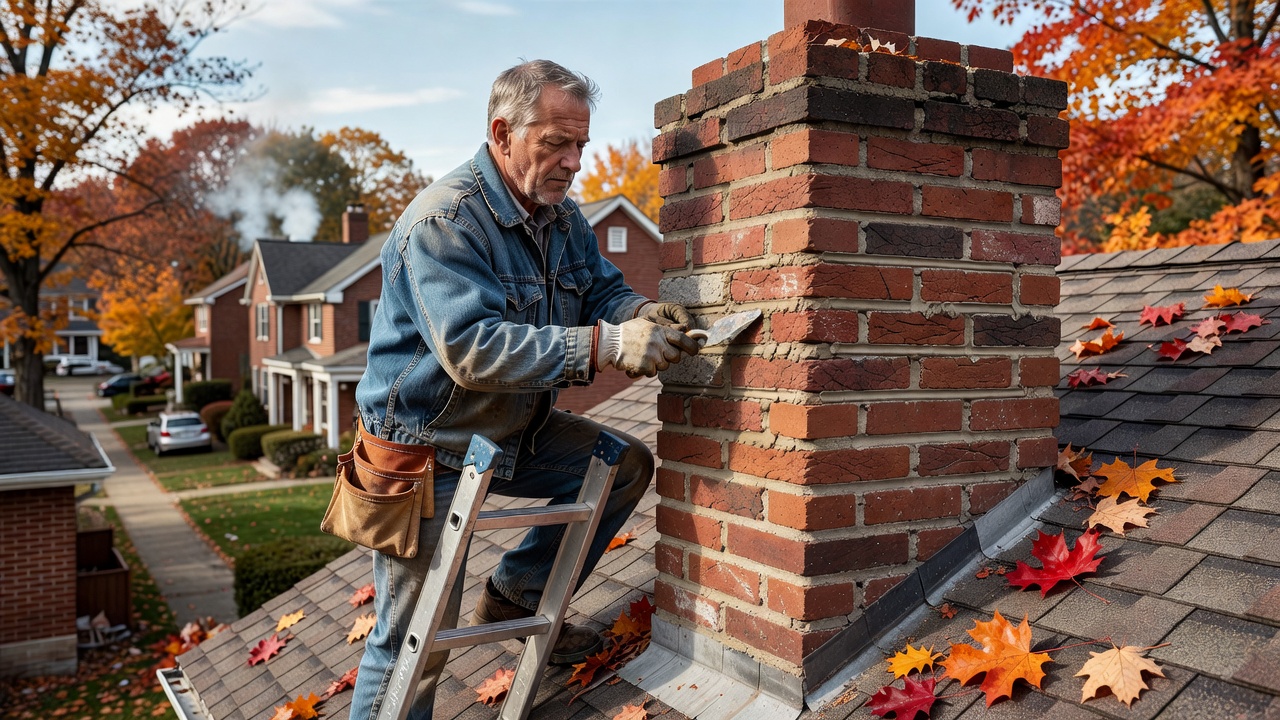
Chimney Repair in Teaneck, NJ
Chimney repair is the hands-on work of fixing structural, masonry, or liner damage that makes a chimney unsafe or inefficient to use. It matters because even modest cracks in the flue lining or missing mortar joints can allow carbon monoxide, smoke, and heat to reach the framing of your home a serious fire and health risk. Here in Teaneck, the combination of hard Bergen County winters, spring freeze-thaw cycles, and the region’s older brick housing stock means chimneys take a beating year after year. Getting problems fixed before the first fire of the season is simply the safest, most cost-effective approach.
Why Autumn Is the Right Time to Catch Chimney Problems in Teaneck
Teaneck sits on the eastern edge of Bergen County, where temperatures routinely dip into the mid-twenties by late November. Water that works its way into a hairline crack during a wet October can freeze solid and widen that crack significantly by the time you light the first fire in December. By scheduling a chimney inspection and any needed repairs before heating season, you stop that cycle before it escalates into a full rebuild of the crown, firebox, or flue.
Spring is the second smart window for repairs. After a Bergen County winter, mortar joints, crowns, and flashing often show new damage that wasn’t visible the previous fall. Addressing these issues in April or May means your chimney has the entire off-season to cure and settle properly before it sees heat again.
What Chimney Repair Actually Covers and What It Doesn’t
“Chimney repair” is a broad term, so it helps to be specific about what falls under that umbrella:
- Tuckpointing and mortar joint repointing — removing deteriorated mortar between bricks and packing in fresh mortar that matches the original in composition and color. This is one of the most common repairs on Teaneck’s older brick chimneys, many of which date to the 1940s–1970s.
- Crown repair and rebuilding — the concrete or mortar cap at the very top of the chimney takes the most weather abuse. Cracks in the crown let water funnel directly into the flue.
- Spalled brick replacement — freeze-thaw damage causes brick faces to pop off. Individual bricks or entire courses can be replaced to restore both structure and appearance.
- Flue liner repair and relining — clay tile liners crack over time; stainless-steel liner inserts or cast-in-place lining restore safe draft and containment.
- Firebox repair — refractory mortar and firebrick replacement inside the firebox where direct flame contact causes the greatest wear.
- Flashing repair and reseal — the metal junction between chimney and roof is a leading source of water intrusion; we re-bed and seal step flashing and counter-flashing as needed.
- Chimney cap installation or replacement — a properly fitted cap keeps rain, birds, and debris out of the flue between fires.
What chimney repair is not is a cosmetic paint job or a quick caulk-and-ignore. Any repair we perform addresses the root cause of the damage, not just the surface symptom.
Our Repair Process, Step by Step
Every chimney repair job at Teaneck Chimney starts with the same foundation: an honest assessment before a single brick is touched.
- Level I or Level II Inspection First — We do not quote repairs blind. A visual inspection (and a camera scan of the flue when interior damage is suspected) tells us exactly what needs fixing, so you get an accurate scope and price — not a lowball estimate that grows on the day of work.
- Written Scope and Explanation — We walk you through what we found, show you photos if we used the camera, and explain the repair options in plain language. You decide what to authorize.
- Material Matching — On Teaneck’s older chimneys, matching mortar composition is important. Pointing a soft, lime-based mortar chimney with a modern Portland cement mix that’s too hard can actually accelerate brick damage. We match the original specification wherever possible.
- Repair Execution — Depending on scope, work may be done from a ladder, a stabilized extension platform, or roof staging. We do not cut corners on access safety both for our crew and to protect your roof and landscaping below.
- Post-Repair Check — After repairs cure, we re-examine the work, confirm draft if the fireplace is operational, and document the completed scope for your records. That documentation is useful for home insurance and future home sales.
Serving Teaneck and the Surrounding Bergen County Area
Teaneck Chimney is a local business not a national franchise dispatching a subcontractor from two counties away. We work regularly throughout Teaneck’s residential neighborhoods, from Queen Anne Victorians near Votee Park to the post-war cape cods and colonials that line the side streets off Cedar Lane. We know the brick-and-mortar profiles common to this area, and we know the specific drainage and frost patterns that affect Bergen County chimneys differently than, say, a chimney in coastal Monmouth County.
Our technicians carry the appropriate liability insurance and are up to date on the National Fire Protection Association (NFPA 211) standards that govern chimney repair work in New Jersey. We pull permits when local code requires them which in Bergen County depends on the scope and type of work. We’ll advise you on that before the job starts.
Frequently Asked Questions About Chimney Repair in Teaneck
How do I know if my Teaneck chimney needs repair or a full rebuild?
The difference comes down to how much of the structure is compromised. If damage is limited to the mortar joints, crown, or individual bricks and the underlying brick courses are still sound targeted repairs are typically the right answer and significantly less expensive than a rebuild. A full rebuild (from the roofline up or from the footing up) becomes necessary when the internal structure is failing, when spalling is widespread through multiple wythes of brick, or when the foundation has shifted. Our inspection will tell you clearly which situation you’re in.
Will tuckpointing fix my chimney’s water leak, or is there something more going on?
Tuckpointing alone solves the leak only if the entry point is deteriorated mortar joints. In Teaneck’s older homes, water often enters through multiple paths simultaneously: cracked crown, failed flashing at the roofline, and open mortar joints all at once. If we repoint the joints but leave a cracked crown unaddressed, you’ll still have a leak. That’s why we inspect and diagnose before we repair so the fix is comprehensive rather than a temporary patch.
How long does chimney repair typically take, and can I use my fireplace right away?
Minor repairs a flashing reseal, cap replacement, or limited repointing are often completed in a single visit of two to four hours. More involved work like full crown rebuilding or flue relining may require a day or more, plus cure time. Mortar and refractory repairs generally need 24 to 72 hours to cure before the chimney is used, depending on the product and weather conditions. We’ll give you a specific timeline when we complete the work, and we won’t leave you guessing.
Schedule Your Chimney Repair Assessment Today
If you’ve noticed crumbling mortar, stained bricks, a musty smell after rain, or a draft that isn’t drawing the way it used to, don’t wait for the problem to get worse. Chimney damage in Teaneck’s climate doesn’t stand still it progresses with every freeze, thaw, and rainstorm.
Contact Teaneck Chimney to schedule an inspection and repair estimate. We’ll give you a straight answer about what your chimney needs, a fair price to do it right, and work you can trust going into heating season.
Call us or use our online contact form to book your chimney repair assessment in Teaneck, NJ.
Related from Teaneck Chimney: Chimney Sweep in Teaneck, NJ · Smart Timing for Chimney Repair Englewood Cliffs NJ