
Urgent Warning Signs You Need a Chimney Sweep Bogota NJ and Oradell Homeowners Should Never Ignore: 2026 Guide for Bergen County Residents
Some chimney problems announce themselves quietly a faint smell, a stain on the ceiling, a drawer that sticks a little more than usual on a damp morning. By the time a homeowner notices them properly, the damage is already weeks or months old. We’ve walked into enough Oradell living rooms and Bogota kitchens to know that the warning signs were almost always there first. The homeowner just didn’t know what they were looking at.
This post lays out the specific, observable signals that mean your fireplace needs a professional chimney sweep Bogota NJ resident and their neighbors across Bergen County can trust and which ones mean you should stop using the fireplace today.
A Call from Oradell That Changed How We Talk About This
Last February, a homeowner on a quiet residential street in Oradell called us after noticing a persistent smoky odor in their den even on days they hadn’t used the fireplace. They assumed it was a neighbor’s wood stove drifting in. It wasn’t. When our technicians arrived and ran a level 2 inspection, we found a significant creosote buildup in the flue and a cracked terra cotta liner tile that had gone unnoticed for at least two heating seasons. The fireplace had been in regular use all winter. That liner crack was directing heat and combustion gases toward the wood framing behind the firebox. We pulled the homeowner from an active fire risk they had no idea they were living with.
That scenario repeats itself across Bergen County every season. Knowing the signs can stop it happening to you.
Warning Signs That Mean Call a Pro Now
1. A Persistent Smoky or Campfire Smell With No Active Fire
If you walk into a room and smell wood smoke on a day you haven’t burned anything, creosote or soot is almost certainly releasing odor from the flue. This intensifies in humid summer months but is equally dangerous in winter. It means your flue has a buildup problem, a draft issue, or both. Do not light another fire until a sweep has inspected the system.
2. Smoke Backing Into the Room During Use
A properly functioning chimney draws combustion gases upward and out. When smoke rolls back into your living space, something is blocking or reversing that draft a clogged flue, a closed or damaged damper, or a structural obstruction like a bird nest. Beyond the nuisance, carbon monoxide is moving with that smoke. This is a stop-use situation.
3. Dark Oily Staining Around the Firebox Opening
Black or brown oily residue on the brick surround or inside the firebox throat is a visual signature of stage two or stage three creosote. According to the Chimney Safety Institute of America (CSIA), stage three creosote — a concentrated, tar-like deposit — is extremely difficult to remove and dramatically increases the risk of a chimney fire. This is not a “keep an eye on it” situation. Call a certified sweep.
4. A Rumbling or Roaring Sound Inside the Flue
If you hear what sounds like distant thunder or a low roar coming from the chimney while a fire is burning, you may be witnessing a chimney fire in progress. Chimney fires can burn at temperatures exceeding 2,000°F according to NFPA 211 guidance, and they can structurally compromise a masonry chimney in a single event. Extinguish the fire, vacate, and call 911 before you call us.
5. White Staining (Efflorescence) on Exterior Masonry
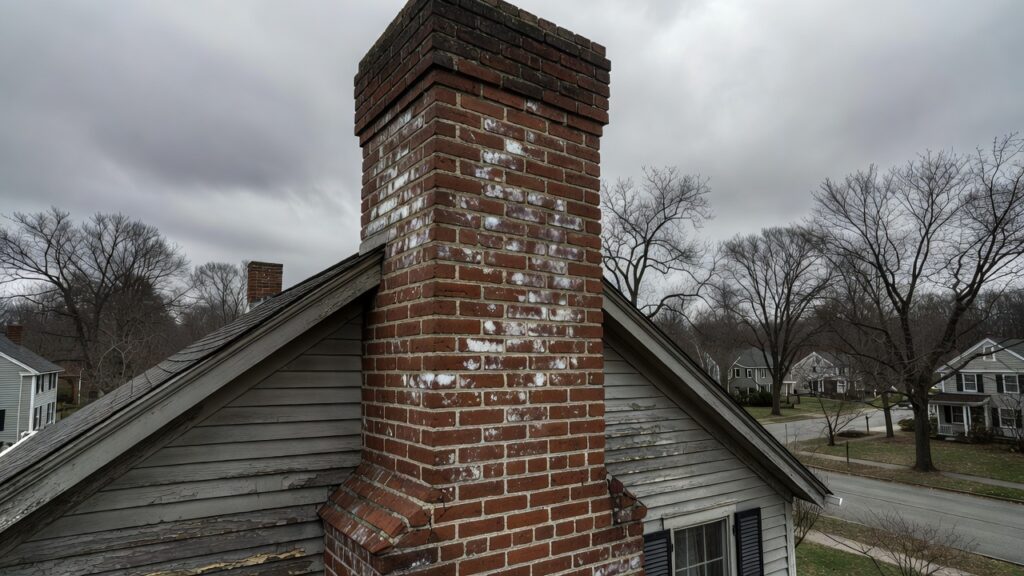
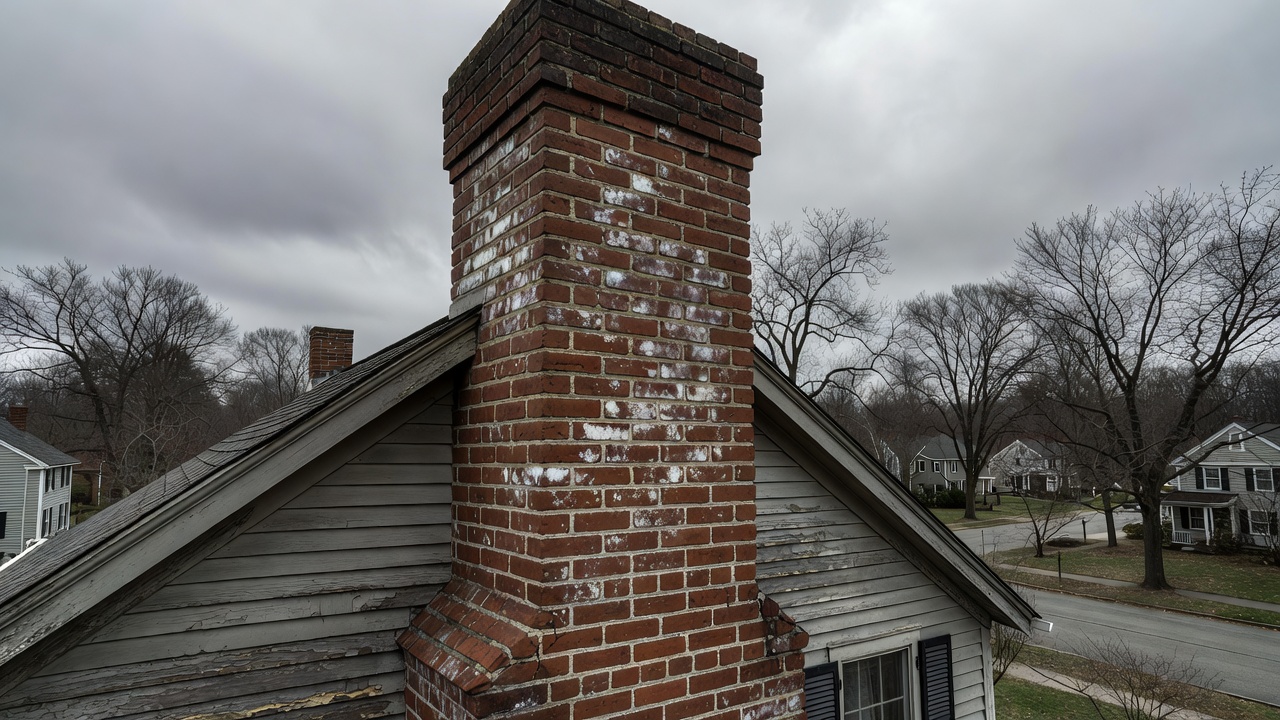
Those chalky white streaks on the outside of a chimney aren’t cosmetic. Efflorescence is mineral salt left behind as water migrates through brick and mortar. It tells us that water is getting into the masonry — which in northern New Jersey’s freeze-thaw winters means the mortar joints and brickwork are actively spalling and cracking with every cold snap. Homeowners in Oradell, River Edge, and Maywood with older brick chimneys see this regularly by late winter. Left alone, it accelerates into a repointing job or worse.
6. Crumbling Mortar or Missing Bricks Visible from the Ground
You don’t need to climb on your roof to spot this. Stand back and look. If you can see mortar joints that look recessed, dark, or absent, or bricks that are chipped and flaking, the chimney crown and structure have been compromised. Water has been getting in. A damaged crown cannot protect the flue from rain, and a damaged flue cannot safely vent combustion gases. This needs masonry repair alongside any sweep work.
7. Rust on the Damper or Firebox Interior
Open the damper and look up with a flashlight. Rust on the damper plate or on the firebox walls is evidence of chronic moisture intrusion. A rusty damper often won’t seal properly, which means cold air falls down the flue in January and warm air escapes in July neither of which is what you want. More importantly, moisture plus heat cycles accelerate deterioration of the liner and firebox components.
8. Debris — Pieces of Tile or Grit — in the Firebox
If you’re cleaning out ash and find small chunks of grey or reddish tile, fragments of clay, or a gritty sand-like material you don’t recognize, those are pieces of your terra cotta flue liner. A compromised liner is a direct fire hazard. NFPA 211 requires that flue liners be sound and free of defects. Fragments in the firebox are the liner’s way of telling you it’s failing. This warrants an immediate level 2 inspection, which includes camera imaging of the full flue interior.
Signs Worth Monitoring — But Still Schedule a Sweep
Not every warning requires you to stop using the fireplace this afternoon, but none of the following should be shrugged off either.
Slow-starting fires or fires that won’t draw well — often a partial blockage or a draft imbalance. Worth having checked before the next heavy-use period.
Animal sounds or scratching inside the flue — birds and squirrels nest in uncapped chimneys throughout Bergen County in spring. A nest is both a blockage and a fire risk once dried out. Schedule a sweep and chimney cap installation before fall.
A damper that’s stiff, won’t open fully, or rattles — mechanically worn dampers reduce draft efficiency and can stick closed or open at the wrong moment. Not an emergency today, but a liability by December.
Why This Matters More in Bergen County’s Climate
Our winters here in northern New Jersey are genuinely hard on masonry. Temperatures swing from the low single digits in January to the forties the following week, and that freeze-thaw cycle hits mortar joints and brick facing harder than people realize. A chimney that looked fine last spring can have measurably more spalling by April. Homeowners in communities like Bogota, Little Ferry, and Englewood Cliffs — many of whom have colonial and cape-style homes with original chimneys from the 1950s and 1960s — are particularly exposed. Older construction often means original clay liners that have never been relned and mortar that predates modern waterproofing formulas.
According to the CSIA, annual chimney inspections and cleanings are the single most effective measure a homeowner can take to prevent chimney fires and carbon monoxide incidents. An annual sweep isn’t a luxury — it’s the baseline.
What Our Inspections Actually Look At
When we respond to a call prompted by any of the signs above, we don’t just sweep and leave. Our technicians examine the firebox, damper, smoke chamber, flue liner, crown, and exterior masonry. For anything involving visible liner damage or a history of water intrusion, we recommend a level 2 inspection with camera imaging so you have documented evidence of what’s happening inside the flue — not just our word for it. If liner replacement or masonry repointing is needed, we’ll tell you plainly what it involves and what it costs before any work begins.
Get a Straight Answer Before the Next Cold Night
If any of the signs above match what you’re seeing, smelling, or hearing at your fireplace, the right move is to have someone who knows chimneys take a look — not to wait until spring, and not to assume last year’s inspection still covers it. We serve homeowners throughout Bergen County, including Oradell, Bogota, River Edge, Maywood, and the surrounding communities. Reach out through our website contact form for a free estimate, and we’ll get a technician to you before the next cold stretch arrives.
Frequently Asked Questions: Chimney Sweep Bogota NJ and Bergen County
How often should I have a chimney sweep in Bogota NJ or nearby towns like Oradell?
The CSIA and NFPA 211 both recommend a professional inspection and cleaning at least once per year, regardless of how frequently you use the fireplace. For homeowners burning wood regularly through a Bergen County winter, an annual sweep before or after the heating season is the standard we advise.
What does a chimney sweep actually do — is it just brushing out ash?
No. A thorough sweep involves removing creosote and soot from the flue liner, inspecting the firebox, damper, smoke chamber, and crown, and identifying any structural concerns. We also check for obstructions like nests or debris. A sweep without an inspection is incomplete work.
My fireplace smells but there’s no smoke visible — is that still a problem?
Yes. Odor without visible smoke typically means creosote is off-gassing, often triggered by humidity or barometric pressure changes. It can also indicate a draft reversal pulling outside air — and odors — back down the flue. Either way, it warrants a professional look before the fireplace is used again.
Can I use my fireplace while waiting for a chimney sweep appointment?
If you’ve spotted debris in the firebox, heard roaring sounds during a fire, or noticed smoke backing into the room, stop using the fireplace until it’s been inspected. For minor cosmetic concerns like mild efflorescence or a stiff damper, limited use may be acceptable — but we’d rather you call us first and let us make that call with you.
How much does a chimney sweep cost in Bergen County in 2026?
Pricing varies depending on the condition of the flue and the level of inspection required. A standard level 1 sweep and inspection for a single-flue system typically runs in the range of $150–$250 in the Bergen County market. Heavily sooted flues, level 2 camera inspections, or additional repair work are priced separately. We provide written estimates before any work begins.
Do older homes in Bogota and Oradell need more frequent chimney service?
Generally, yes. Homes built before 1980 often have original clay tile liners and mortar work that have seen decades of thermal cycling. These systems benefit from more vigilant inspection schedules, and any evidence of liner deterioration should be addressed promptly rather than deferred. Our technicians are familiar with the housing stock common throughout Bergen County and can give you an honest read on what your specific system needs.
Related from Teaneck Chimney: Smart Chimney Inspection Englewood NJ · Practical Guide to Dryer Vent Cleaning Teaneck NJ