
Dryer Vent Cleaning Teaneck NJ: Common Problems Homeowners Miss and How We Fix Them
Dryer vent cleaning in Teaneck NJ is one of those services most homeowners schedule too late, if they schedule it at all. A clogged or improperly maintained dryer vent is one of the leading causes of residential fires in the United States, according to the U.S. Fire Administration, and the majority of those fires trace back to lint accumulation, not equipment failure. Here is what actually goes wrong and how we diagnose and correct it.
A call from Ridgefield Park that started with a slow dryer
A homeowner in Ridgefield Park called us last spring convinced her dryer was failing. Clothes were taking two full cycles to dry, and the laundry room felt uncomfortably warm. She had already priced out a replacement unit. When our technician arrived and inspected the vent run, he found a near-total blockage about eight feet in from the wall cap, caused by years of compacted lint combined with a crushed section of flexible duct behind the dryer. No new dryer needed. A thorough cleaning and a short duct repair solved the problem the same afternoon.
That kind of misdiagnosis is common. Homeowners often blame the appliance when the duct system is the real issue. Below we walk through the problems we see most often in Teaneck and the surrounding Bergen County communities, the symptoms that point to each one, and what a proper professional fix looks like.
Problem one: lint buildup that nobody notices
Lint accumulates in dryer vents gradually. There is rarely a single moment when a homeowner thinks “the vent is clogged.” Instead, drying times slowly stretch from 45 minutes to an hour, then longer. The dryer runs hotter. The lint trap fills faster. Clothes come out warmer than usual but still damp.
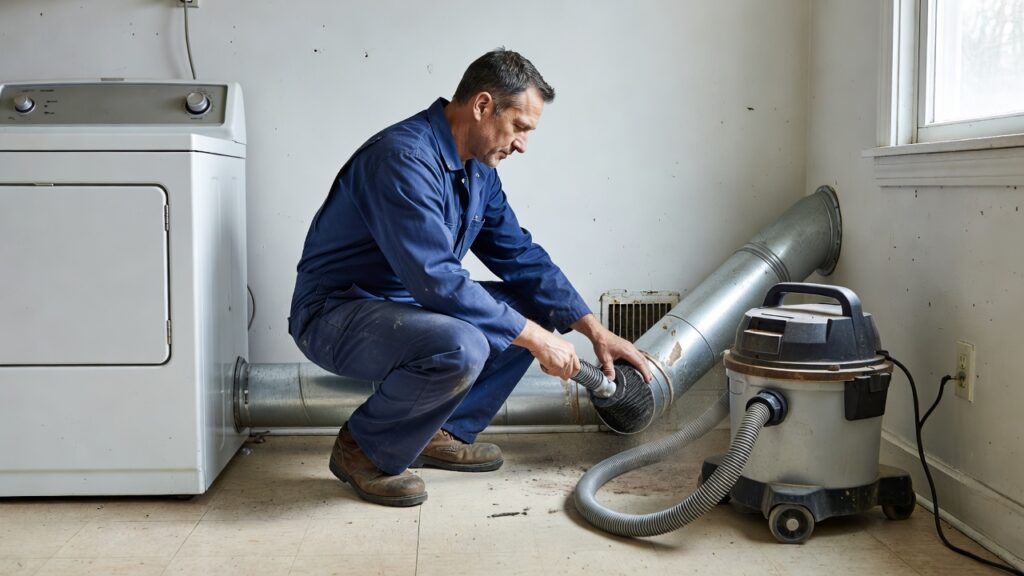
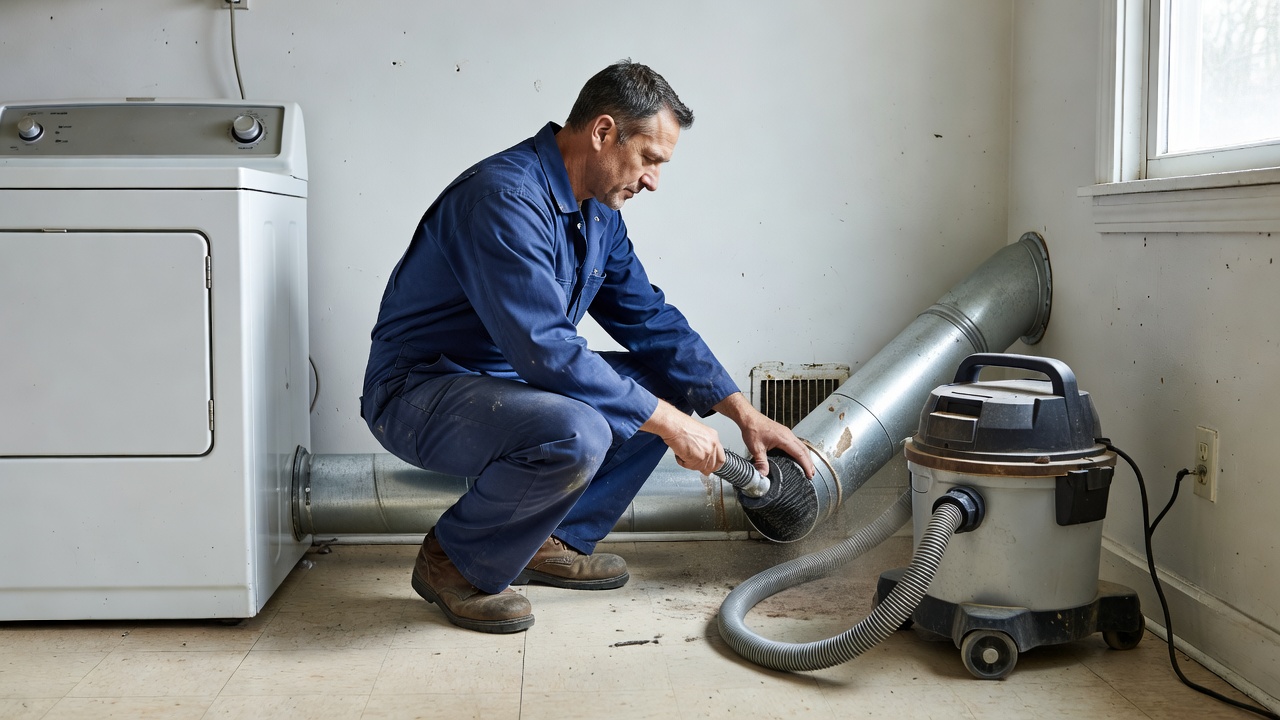
The diagnostic step we take is to measure airflow at the exterior termination cap while the dryer runs. A properly flowing 4-inch duct should produce a strong, steady exhaust. Weak or intermittent flow tells us restriction is present somewhere in the run. We then use a rotary brush system with commercial vacuum extraction to clear the duct from both ends, working through any elbows or offsets in the run.
According to NFPA 211 (2026 edition), dryer venting systems should be inspected and cleaned at least once per year, more frequently if the household runs multiple loads per day or uses the dryer for heavy items like bedding. In our experience across Teaneck and Leonia, most homeowners go three to five years between cleanings, which is long enough for a serious obstruction to form.
Prevention note: clean the lint screen after every load and check the exterior cap seasonally. Neither step replaces a professional cleaning, but both slow accumulation.
Problem two: the wrong type of duct material
Flexible plastic accordion duct is still sold in hardware stores and is still installed behind many dryers in older Teaneck homes. It is not rated for dryer exhaust. The ridges trap lint. The plastic can ignite. In New Jersey, the International Residential Code requires rigid or semi-rigid metal duct for dryer venting, and that requirement has been in place long enough that any plastic duct installation is effectively out of compliance.
We encounter foil accordion duct fairly often in older two-family homes in Fort Lee and Cliffside Park, where laundry rooms were added as afterthoughts and the original installer used whatever was available. The symptoms are the same as a lint blockage, but the fix is different. Cleaning the duct helps temporarily, but the real solution is replacing the flexible section with smooth-wall rigid metal duct, properly sized and supported.
When we find foil or plastic duct during a dryer vent cleaning, we photograph it, explain the code issue and the fire risk, and give the homeowner a clear repair estimate before we do anything else.
Problem three: a duct run that is too long or has too many turns
Building codes specify a maximum equivalent length for dryer duct runs, typically 25 feet with deductions for each elbow. Many Teaneck homes, especially the colonial and cape-style houses built in the 1950s and 1960s, have laundry rooms positioned far from an exterior wall, which forces long duct runs with multiple 90-degree bends.
The symptom here is chronic slow drying even after a recent cleaning. Airflow is simply inadequate for the run length. We measure the actual duct path, calculate the equivalent length, and compare it against the dryer manufacturer’s specification. If the run exceeds the limit, the dryer is working against itself every cycle.
The fix depends on the home’s layout. Sometimes we can reroute the duct more directly. Sometimes a booster fan is appropriate, though we evaluate that carefully because a fan installed in the wrong location can create a condensation trap. In rare cases, relocating the dryer connection point is the cleanest solution.
Problem four: a damaged or blocked termination cap
The exterior cap is the end of the system and the part most exposed to weather. In Bergen County, the freeze-thaw cycles from November through March take a real toll on plastic caps, cracking the louvers or warping the flap so it no longer seals properly. A damaged cap lets cold air back into the duct, which causes condensation, which causes lint to stick and compact faster.
We also find bird nests in termination caps regularly, particularly in early spring. A nest can block the duct completely. In Oradell and Maywood, where older neighborhood trees attract nesting birds close to the roofline, this is not an unusual find.
During every dryer vent cleaning we inspect the cap visually and functionally, checking that the flap moves freely and closes fully under gravity. A worn or cracked cap is an inexpensive fix that prevents a lot of downstream problems.
Problem five: a vent that terminates in the wrong location
We occasionally find dryer vents that were run into a crawl space, an attic, or even a wall cavity rather than to the exterior. This is a serious installation error. Moist, lint-laden air dumped into an enclosed space creates conditions for mold, structural moisture damage, and fire risk.
The CSIA (Chimney Safety Institute of America) includes dryer exhaust systems in its scope of home venting safety and notes that improper termination is among the most dangerous installation defects a technician can find. If we discover a vent that does not terminate to open exterior air, we stop the cleaning, document the condition thoroughly, and provide the homeowner with a clear scope of work to reroute the duct correctly before we proceed.
What a professional dryer vent cleaning actually costs in Teaneck
For a standard single-family home in Teaneck with a duct run under 15 feet and one or two elbows, a professional dryer vent cleaning typically runs between $99 and $175. Longer runs, multiple elbows, or roof terminations add to that figure. Duct replacement work is priced separately based on materials and access. We give every homeowner a written estimate before any work begins, so there are no surprises.
Schedule your dryer vent cleaning before the next heating season
Late summer and early fall are the best times to have this done in Teaneck, before the household shifts to heavier laundry loads and the dryer runs more frequently through the winter months. If it has been more than a year since your last cleaning, or if you have never had the vent inspected, that is enough of a reason to call.
Our team serves Teaneck and the surrounding Bergen County communities, including Bogota, Englewood, New Milford, and River Edge. We also offer our chimney inspection service and chimney sweeping if you want to take care of both venting systems in one visit. Reach out through our website contact form to request a free estimate. We will get back to you promptly.
Frequently Asked Questions About Dryer Vent Cleaning Teaneck NJ
How often should I have dryer vent cleaning done in Teaneck NJ?
NFPA 211 (2026 edition) recommends inspecting and cleaning dryer venting at least once per year. Households that run the dryer daily or regularly dry bulky items like comforters should consider twice-yearly service. If your dryer is taking more than one cycle to dry a normal load, that is a sign the vent needs attention regardless of when it was last cleaned.
Can I clean my dryer vent myself?
A homeowner can remove surface lint from the first foot or two of duct behind the dryer, but consumer brush kits rarely reach through a full duct run with multiple elbows. They also cannot measure airflow, inspect the termination cap, or identify duct material problems. A professional cleaning uses rotary brush equipment with commercial vacuum extraction and includes a functional check of the entire system.
What are the signs that my dryer vent in Teaneck is clogged?
The most common signs are clothes taking longer than one cycle to dry, the dryer cabinet feeling hot to the touch, the laundry room becoming warm and humid during a cycle, and a burning or musty smell coming from the dryer. A vent that has not been cleaned in several years may not show obvious symptoms until the blockage is severe.
Is dryer vent cleaning the same as chimney sweeping?
No. The two services use different equipment and address different systems. A chimney sweep clears combustion byproducts from a fireplace or heating appliance flue. Dryer vent cleaning clears lint and debris from the exhaust duct of a clothes dryer. Some companies, including ours, perform both services, which can make it convenient to schedule them together.
How long does a dryer vent cleaning take?
For a typical Teaneck home with a straightforward duct run, the cleaning itself takes about 30 to 45 minutes. Add time for the initial inspection and any findings we need to walk you through. A longer or more complex duct run, or one that requires a repair, will take more time. We give you a realistic time estimate when we book the appointment.
Does my homeowner’s insurance cover dryer vent fires?
Most standard homeowner’s policies cover fire damage regardless of cause, but insurers can and do ask about maintenance history after a claim. If an investigation shows that a dryer vent fire resulted from years of neglect, a claim can be complicated. Keeping a record of annual professional cleanings is a simple way to document that you maintained the system properly.
Related from Teaneck Chimney: Practical Guide to Dryer Vent Cleaning Teaneck NJ