
Chimney Waterproofing Teaneck NJ: What You Can Handle Yourself and What Needs a Pro
Most homeowners in Teaneck can safely do a few waterproofing tasks on their own. But the work that actually stops water from getting into your masonry applying a vapor-permeable sealant, repairing a cracked crown, patching failed mortar joints requires the right materials, proper surface prep, and an honest assessment of what’s already damaged. Get it wrong and you can trap moisture inside the chimney and speed up freeze-thaw deterioration rather than slow it down.
Why water is hard on chimneys in this part of Bergen County
Teaneck sits in a climate zone that sees genuine freeze-thaw cycling every winter. Temperatures drop below freezing, moisture that has soaked into brick and mortar expands, and the masonry cracks. By spring, those cracks are wider than they were in October. That cycle repeats for decades in the older Colonial and Cape Cod homes that make up a lot of the housing stock along Teaneck Road and DeGraw Avenue, and it’s the main reason chimney waterproofing in Teaneck NJ is worth taking seriously rather than putting off.
A homeowner in Ridgefield Park called us last February after noticing white chalky streaks down the front of their fireplace facade. That’s efflorescence, a sign that water is moving through the masonry and depositing salts on the surface as it evaporates. The homeowner had already bought a can of spray sealant from a big-box store and applied it the previous fall. The product they used was not vapor-permeable, so it had trapped moisture inside the brick. By the time we arrived, two courses of brick near the crown were spalling the faces were literally popping off. What started as a straightforward waterproofing job became a partial masonry rebuild. The original cost of doing it right would have been a fraction of the repair.
What you can safely handle yourself
We’re not going to tell you that every chimney task requires a professional. Some of it genuinely doesn’t, provided your chimney is structurally sound and you’re working at ground level or have safe ladder access.
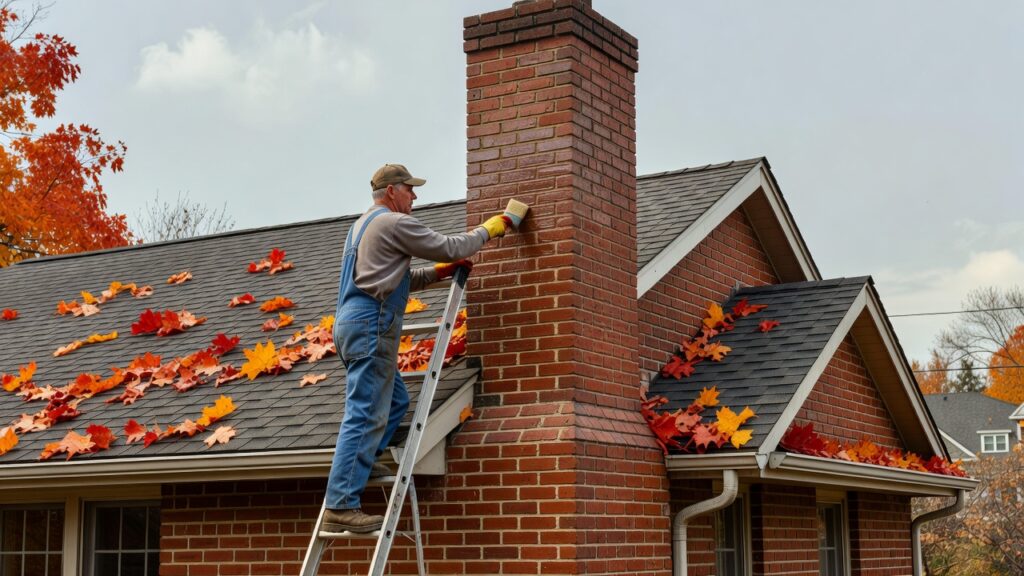
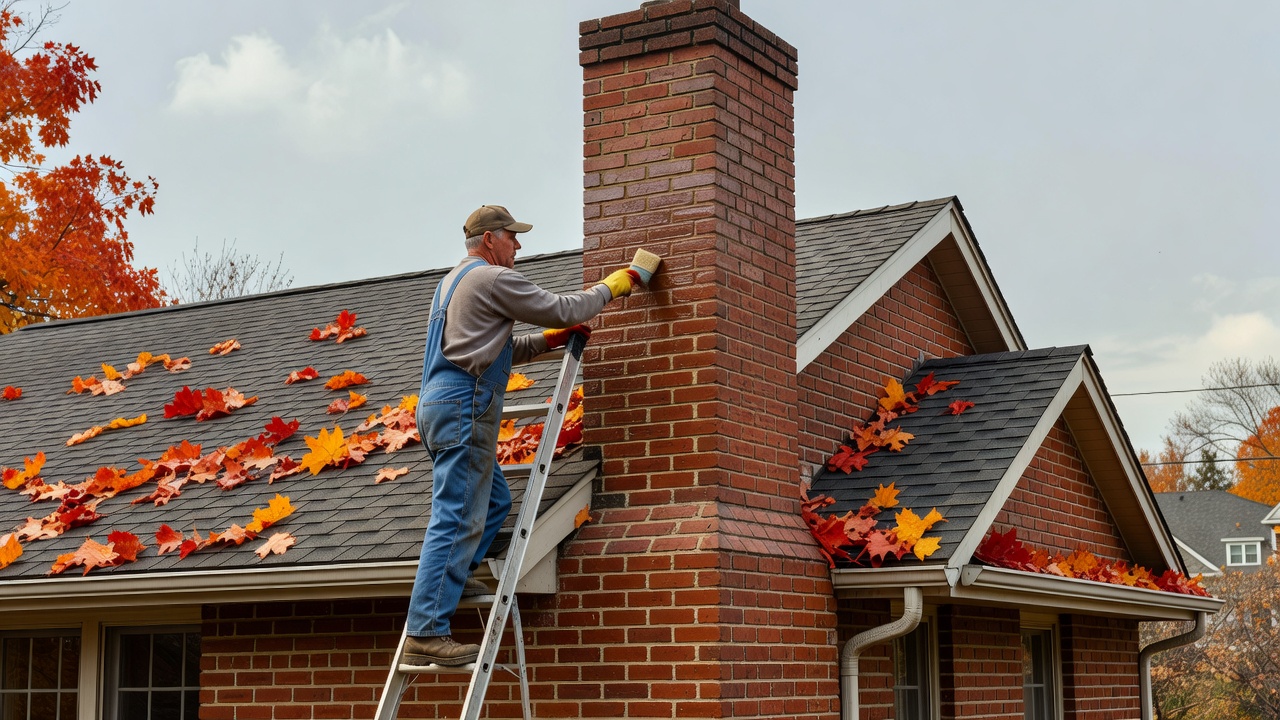
Cleaning the exterior surface before any treatment is applied is work any capable homeowner can do. Use a stiff masonry brush and water. Avoid pressure washers on older brick; the force drives water deeper into the masonry and can dislodge loose mortar. Let the surface dry fully, which in Bergen County weather means waiting several dry days in a row, not just overnight.
Replacing a chimney cap if the existing one is a simple slip-fit style is another task within reach of a careful DIYer. A properly fitted cap keeps rain, animals, and debris out of the flue. The CSIA recommends that all chimneys have a cap in place as a baseline moisture-control measure, and the installation itself is not complicated if the old cap simply lifts off and the new one drops on.
Applying a penetrating, vapor-permeable masonry water repellent to the exterior brick is also something a homeowner can do with a big caveat. The product must be specifically rated for chimneys, must be vapor-permeable (sometimes labeled “breathable”), and the masonry must be clean, dry, and in good structural condition first. Products like Siloxane-based sealants are appropriate. Standard concrete sealers or paint are not. If you apply the wrong product, you create the same problem the Ridgefield Park homeowner ran into.
Where you need to call a pro, and why
The honest reason to call us for certain parts of chimney waterproofing Teaneck NJ work isn’t to protect our business. It’s because some tasks carry real consequences when they go wrong.
Crown repair and rebuilding requires the right mix ratio and proper tooling. A chimney crown is the concrete or mortar slab that caps the top of the chimney structure and sheds water away from the flue opening. According to NFPA 211, the crown should extend past the edge of the chimney and slope downward to prevent pooling. Homeowners who patch crowns with standard mortar mix end up with a repair that fails within one or two winters because the mix shrinks and cracks as it cures. We use a purpose-formulated crown coat material and tool the edges properly. That repair lasts.
Mortar joint repointing is similarly something that looks straightforward but has real failure modes. The depth of the removed mortar matters, the joint profile matters, and the mortar type has to match the existing masonry. Using a Portland cement mix that’s harder than the surrounding brick causes the brick faces to crack rather than the mortar joint, which is the opposite of what you want. Our masonry repair and repointing work accounts for all of that.
Flashing repair and replacement is work for a professional. The flashing is the metal seal between your chimney and your roof deck. A failed flashing is one of the most common sources of water intrusion in homes in Englewood and Leonia that we inspect. Resealing it with roofing tar is a temporary fix at best. Properly replacing step flashing and counter-flashing requires cutting into the mortar joints, fitting the metal correctly, and resealing. Done wrong, it sends water into the roof deck and the interior ceiling below.
If there’s any question about structural integrity, visible cracks running through brick courses, or signs of interior water damage at the firebox or smoke chamber, those warrant a professional inspection before any waterproofing work starts. According to the CSIA, water is the leading cause of chimney deterioration in the United States, and applying a surface sealant over a structurally compromised chimney masks the damage without fixing it. We offer both Level 1 and Level 2 chimney inspections that can identify exactly what condition your chimney is in before we recommend any treatment.
What it costs to do this right in 2026
For homeowners in Teaneck, Maywood, and New Milford budgeting waterproofing work in 2026, here’s a realistic range. A professional-grade penetrating sealant application on a standard two-story chimney typically runs between $200 and $400 depending on the chimney’s surface area and accessibility. Crown repair or resurfacing runs $250 to $600 depending on the extent of damage. A full crown rebuild with proper form work is higher. Flashing replacement varies by roof complexity but generally falls between $400 and $900. If mortar repointing is needed first, budget separately for that work.
The DIY cost for a vapor-permeable sealant product is roughly $50 to $100 for a chimney of average size, assuming the masonry is already in good shape. That’s a reasonable investment if the conditions are right. It is not a substitute for crown repair, repointing, or flashing work.
Schedule Your Chimney Waterproofing Assessment
If you’re not sure what condition your chimney is in, that’s where we start. Our team works throughout Teaneck and the surrounding Bergen County communities, and we’ll give you a straight answer about what’s actually needed rather than recommending work that isn’t. Reach out through the contact form on our website to request a free estimate. No pressure, no upselling, just an honest look at what your chimney needs before another winter cycle hits.
Frequently Asked Questions About Chimney Waterproofing Teaneck NJ
Can I use regular brick sealer from a hardware store on my chimney?
Standard brick sealers and concrete sealers are not designed for chimneys and many are not vapor-permeable. On a chimney, you need a product that allows moisture vapor to escape from within the masonry while blocking liquid water from entering. Using a film-forming or non-breathable sealer traps moisture inside the brick, which accelerates freeze-thaw damage over winter. Look specifically for siloxane-based penetrating water repellents rated for chimneys.
How often does a chimney in Teaneck need to be waterproofed?
Penetrating water repellents typically last five to ten years depending on the product and how much weather exposure the chimney gets. In Bergen County, where freeze-thaw cycles are frequent and winters are genuinely cold, we generally recommend having the exterior assessed every few years as part of a routine chimney inspection. If you see efflorescence, new cracks, or spalling brick, don’t wait for the next scheduled check.
What’s the difference between waterproofing and sealing a chimney?
The terms get used interchangeably, but there’s a meaningful difference. Waterproofing typically refers to applying a vapor-permeable penetrating repellent to the masonry exterior. Sealing often refers to caulking or coating specific joints, the crown, or the flashing connection points. A complete waterproofing job addresses all of those areas, not just the brick face. Applying a sealant to the brick while ignoring a cracked crown or failing flashing won’t stop water from getting in.
Will waterproofing fix a chimney that’s already leaking?
No. If water is already getting into the chimney or the firebox, applying a surface repellent won’t solve it. You need to find the source first, which is typically a cracked crown, failed flashing, a missing or damaged cap, or deteriorated mortar joints. Those issues need repair before any waterproofing treatment makes sense. A Level 1 or Level 2 inspection can identify the source before you spend money on treatments that won’t address it.
Is chimney waterproofing something to do in fall or spring?
Fall is the better window in Teaneck and Bergen County. You want the masonry to be dry and the temperature to be above 40 degrees Fahrenheit for several days during and after application. Late September through October usually works well. Spring works too, but by then the chimney has already gone through a full winter without protection. If you missed fall, a dry stretch in April or May is a reasonable second choice.
Do I need an inspection before getting my chimney waterproofed?
If the chimney hasn’t been inspected recently or you’ve noticed any signs of damage, yes. Applying a water repellent over hidden cracks or spalling masonry can make future repairs more complicated and more expensive. According to NFPA 211, chimneys should be inspected at least annually. Our team can inspect and waterproof in the same visit when conditions allow, which saves you time and gets the work done before the next heating season.
Related from Teaneck Chimney: Chimney Sweep in Teaneck, NJ · Chimney Repair in Teaneck, NJ