
Published November 5, 2026
Chimney Cap Missing or Damaged? Warning Signs You Need Chimney Cap Installation in Teaneck NJ Before Winter Sets In
March and April are when we see it most. The snow melts, homeowners head outside, and someone glances up at the roofline and notices the chimney cap is gone, tilted sideways, or rusted through. By then, three or four months of wet weather have already worked their way into the flue. Chimney cap installation in Teaneck NJ is one of the most straightforward repairs we do, but the window to act before real damage sets in is shorter than most people realize.
Bergen County winters are hard on masonry. The freeze-thaw cycle between December and March can run dozens of times in a single season, and an uncapped flue is essentially an open pipe to the sky during all of it.
A Situation We See Every Spring in This Area
A homeowner in Ridgefield Park called us last February after noticing rust stains streaking down the inside of their firebox. They had a wood-burning fireplace they used a few times each winter and figured the staining was cosmetic. When our technicians got on the roof, the cap was gone entirely. It had been missing long enough that the flue tiles had started to crack from repeated moisture expansion. What would have been a $200 to $350 cap installation had become a conversation about partial relining. We were able to address the immediate water entry and document the tile condition through our chimney inspection service, but the homeowner was clear that catching it a season earlier would have saved them real money.
That story is common. Here are the signs that tell you it’s time to stop watching and start calling.
Warning Signs That Mean You Need a Cap Now
1. You can see daylight or sky through the top of the flue
Stand in front of your fireplace, open the damper, and look up. If you see open sky or light without any cap silhouette, the cap is missing. There is no “keep an eye on it” version of this. An open flue lets in rain, snow, animals, and debris every single day. Book the appointment.
2. Rust stains inside the firebox or on the smoke shelf
Rust only forms where metal contacts moisture repeatedly. If you’re seeing orange or brown streaking on the firebox walls, the damper frame, or the smoke shelf, water has been entering the flue. According to the Chimney Safety Institute of America (CSIA), water is the single most common cause of chimney deterioration, and a properly fitted cap is the first line of defense against it. This is a “call a pro now” sign.
3. Animals or animal sounds in the flue
Scratching, chirping, or rustling from behind the damper usually means a bird, squirrel, or raccoon has taken up residence. Chimney swifts are federally protected and cannot be removed once nesting begins, which typically runs May through August. If you hear activity before nesting season starts, get a cap installed immediately. After nesting season begins, you’re waiting until fall. This comes up every spring in Teaneck, Leonia, and Englewood alike.
4. Water stains on the ceiling or wall near the chimney
Brown or yellow staining on drywall adjacent to the chimney chase can come from several sources, but an uncapped or damaged flue is high on the list. NFPA 211 (the standard that governs chimney systems, updated through its current 2026 edition) identifies water intrusion as a primary driver of structural chimney failure over time. Don’t assume the stain is from a roof leak without ruling out the chimney first.
5. Crumbling mortar or spalled brick on the upper chimney
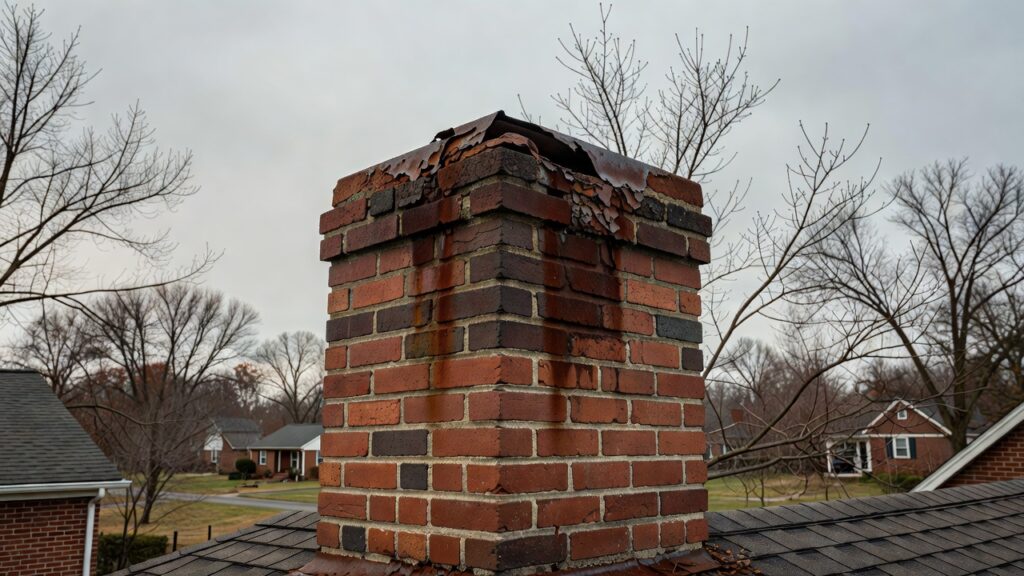
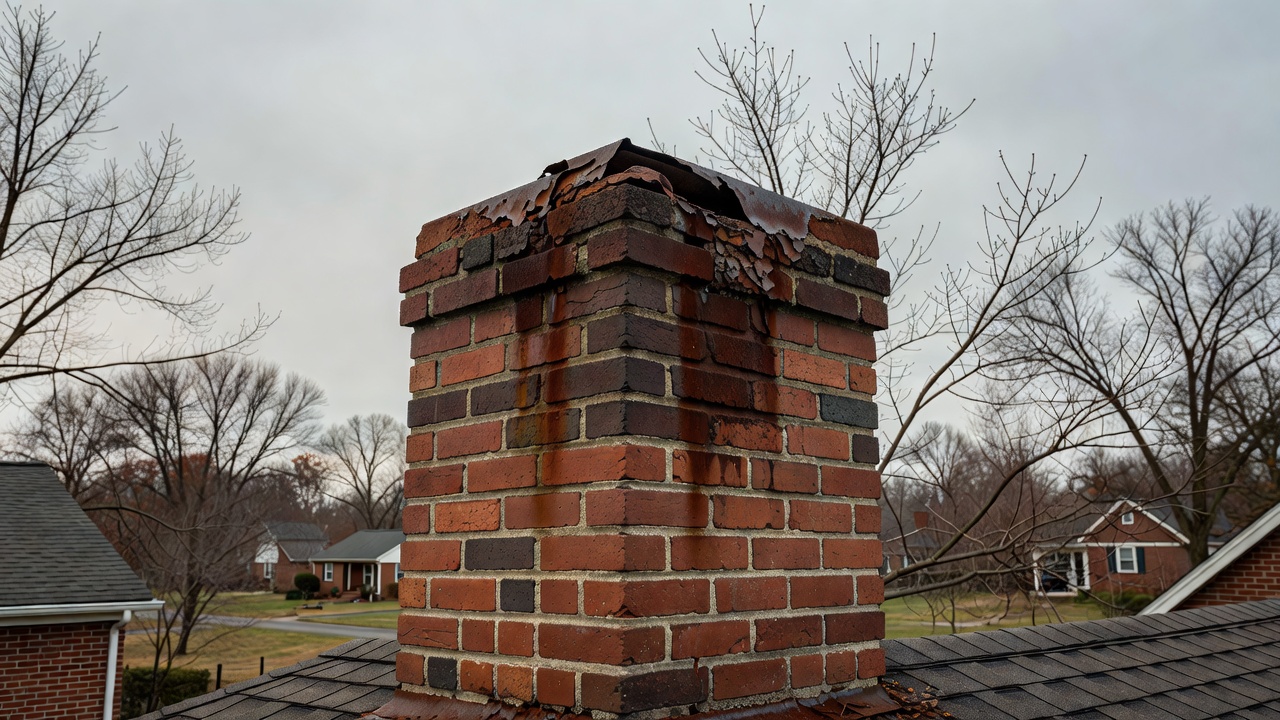
If you can see deteriorating mortar joints or flaking brick faces near the crown and top courses of the chimney from the ground, freeze-thaw damage from repeated moisture penetration is likely at work. A missing or cracked cap accelerates this damage every winter. What you’re seeing on the outside surface often reflects worse conditions inside. Our masonry repair and repointing service can address the exterior, but the cap needs to come first to stop new water from entering.
6. A cap that’s visibly tilted, bent, or held on by one screw
Sometimes the cap is still there but barely. Wind events that come through the Fort Lee and Cliffside Park corridor along the Palisades are strong enough to shift a loose cap. If yours is sitting at an angle or has obvious physical damage, it’s not doing its job. This is a “schedule soon” situation that becomes a “call now” situation the moment rain is in the forecast.
7. Debris in the firebox after the chimney has been closed
Leaves, twigs, or nesting material inside a firebox that hasn’t been used for months means something is getting in from above. Even a mesh cap with a failed gasket or a bent screen panel will allow debris entry. Left unaddressed, that debris is a fire hazard the next time you light the fireplace.
8. A strong animal or musty odor when the damper is open
A musty, earthy, or animal smell from the firebox is a reliable indicator of organic material inside the flue, either nesting debris, animal waste, or moisture-soaked creosote. All three trace back to inadequate cap protection. This is a pro-call situation, not something to mask with a fireplace deodorizer.
The Cost of Waiting
A standard stainless steel chimney cap installation in Teaneck NJ typically runs between $200 and $400 depending on flue size and cap type. That number rises quickly once water damage to the flue liner, crown, or surrounding masonry enters the picture. We’ve replaced caps for homeowners in Maywood and New Milford who caught the problem early and walked away with a straightforward repair. The ones who waited were often looking at liner assessments and crown rebuilds on top of the cap cost.
The best time to schedule is late summer or early fall, before the first hard freeze. The second-best time is right now, before the next rain event works further into an already-compromised flue.
Schedule Your Chimney Cap Installation in Teaneck NJ
If you recognized two or more of the signs above, we’d encourage you to reach out before the situation moves from a simple cap replacement to a more involved repair. Our team serves Teaneck and the surrounding Bergen County communities, and we’re glad to take a look and give you a straight answer about what’s needed. Use the contact form on our website to request a free estimate. No pressure, no upselling, just an honest assessment from technicians who work in these neighborhoods every week.
Frequently Asked Questions About Chimney Cap Installation Teaneck NJ
How much does chimney cap installation cost in Teaneck NJ?
Most standard installations run between $200 and $400. The price varies based on flue dimensions, the type of cap (single-flue vs. multi-flue), and the material, with stainless steel being the most durable option for Bergen County’s wet winters. If the crown or surrounding masonry needs repair before the cap can be properly seated, that adds to the total.
Can I install a chimney cap myself?
Some single-flue slip-in caps can be placed without professional help, but working on a roof with any pitch carries real fall risk. Beyond safety, an improperly sized or seated cap can trap moisture or restrict draft, which creates its own problems. For most homeowners, having a technician handle it means the cap is correctly measured, fitted, and secured in one visit.
How do I know what size chimney cap I need?
Cap sizing is determined by the outside dimensions of your flue tile, not the opening you see from inside the firebox. A technician will measure the flue at the crown. Getting this wrong by even an inch or two can mean a cap that leaks at the edges or one that rattles loose in high wind.
How long does a chimney cap last?
A quality stainless steel cap should last 20 or more years under normal conditions. Galvanized steel caps are cheaper upfront but typically show rust and failure within 5 to 10 years in a climate with as much moisture and temperature variation as Bergen County experiences. Copper caps are extremely durable and develop a patina over time, though they come at a higher initial cost.
What time of year is best for chimney cap installation in Teaneck NJ?
Late summer through early October is the ideal window. The weather is stable, demand for chimney services is lower than in fall, and the cap is in place before the first freeze. If you’ve already missed that window, install as soon as possible. Every uncapped rain or snow event adds to potential moisture damage inside the flue.
Does a chimney cap affect fireplace draft?
A properly sized and designed cap should have no negative effect on draft. Some cap designs, particularly those with solid tops and open sides, can actually reduce downdraft issues caused by nearby trees or structures. If a cap is too small or the mesh screen becomes clogged with creosote or debris, it can restrict airflow, so annual inspection of the cap is worth including in your regular chimney sweep service.
Serving your area: For related services in nearby communities, see Short Hills Chimney and Chimney Experts in Port Chester.
Related from Teaneck Chimney: Chimney Liner Installation in Teaneck, NJ