
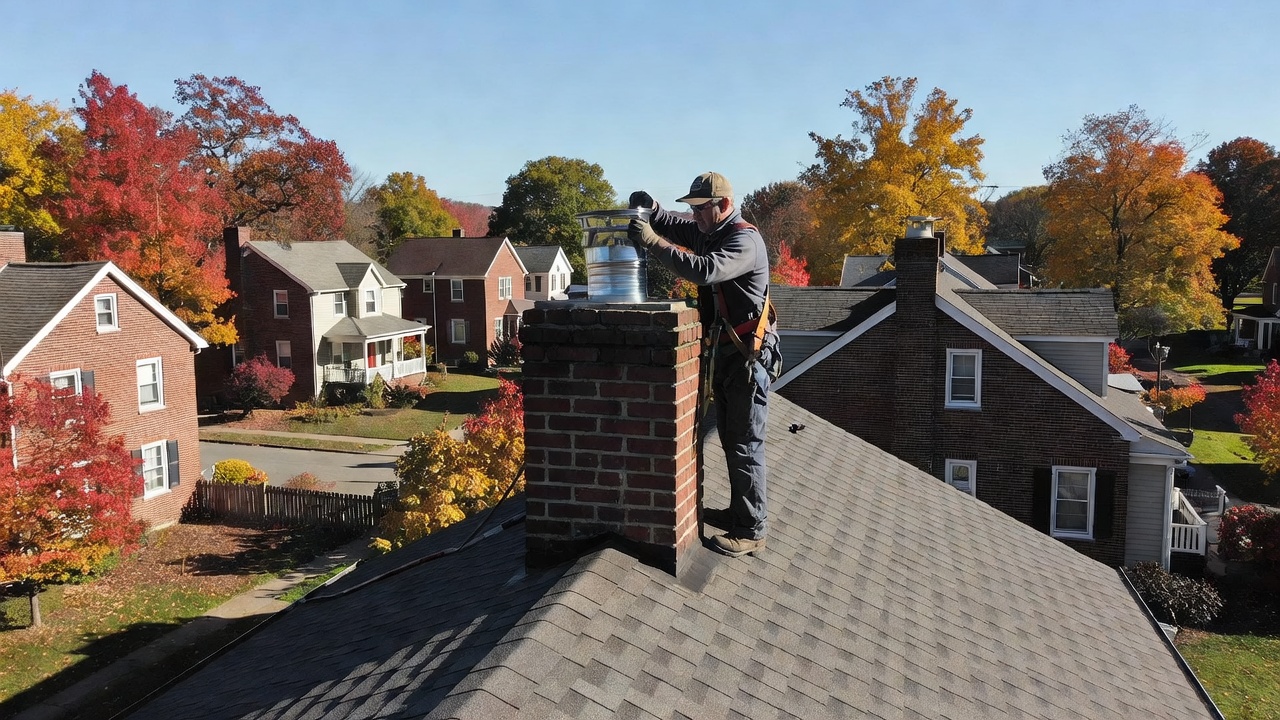
Chimney Liner Installation in Teaneck, NJ
A chimney liner is the protective sleeve running through the interior of your chimney that contains combustion gases and directs them safely out of the house. Without a sound liner, carbon monoxide, creosote, and heat transfer directly through the masonry into the surrounding framing. Chimney liner installation is the process of putting a new, code-compliant liner in place, either because the original clay tile has cracked, because you’ve switched fuel types, or because the flue was never sized or lined properly to begin with.
A lot of Teaneck homes were built in the 1940s and 1950s, and their original terra-cotta tile liners are now 70-plus years old. Tile that old cracks from seasonal freeze-thaw cycles and from years of thermal expansion. Once a tile liner is fractured, the flue is compromised, and no amount of sweeping fixes that.
How we figure out which liner you actually need
Before we quote anything, we run a Level II video inspection. A camera goes the full length of the flue so we can document every crack, offset, and obstruction. We measure the interior cross-section at multiple points, because oversized or undersized flues are a common cause of poor draft and accelerated creosote buildup.
The right liner depends on what the chimney serves. A gas insert has different requirements than a wood-burning fireplace or an oil furnace. Liner diameter is calculated against BTU output and flue height. We walk you through those numbers before any work begins so you understand what you’re getting and why.
What the installation actually involves
Most liner installations in residential Teaneck homes use a flexible 316-grade stainless steel liner. Stainless handles the sulfur content in oil and gas flue gases better than aluminum, and it resists creosote corrosion from wood burning. For straight, unobstructed flues, a rigid stainless liner is an option too; it’s slightly more durable over a very long service life.
The process:
- We protect the interior of the house with drop cloths and seal off the firebox opening before any work at the roofline begins.
- The new liner is fed from the top of the chimney down, with a nose cone attached to guide it past any offsets.
- Insulation wrap goes around the liner. This improves draft, raises the flue gas temperature to reduce condensation, and is required by code when the liner diameter is reduced from the original flue size.
- A stainless top plate is fitted at the crown, and the liner is connected to the appliance connector or smoke chamber at the base.
- We seal the connection points and confirm the liner is properly tensioned and secured.
- A final visual inspection confirms alignment and that nothing was disturbed in the firebox or smoke shelf.
The job typically takes three to five hours for a standard single-story or two-story home. We clean up completely before we leave.
What’s included in the price
Our liner installation price includes the pre-installation video inspection, the liner itself, insulation wrap, a stainless top plate, connection at the appliance end, cleanup, and a written report with photos. We don’t charge separately for the inspection when you’re proceeding with installation. You’ll receive documentation of the liner model, the installation date, and the manufacturer warranty information so you have it on file.
Stainless steel liner manufacturers typically back their products with a lifetime warranty against burn-through and corrosion when the liner is installed and used according to specification. That warranty travels with the house, which matters if you ever sell.
Why Teaneck homes in particular see liner failures
Bergen County winters put repeated freeze-thaw stress on masonry. A chimney on the north or east side of a house, which is common on the older cape cods and colonials along Garrison Avenue and the Cedar Lane corridor, gets less solar warming and holds moisture longer in the joints and tile. That moisture expands when it freezes, and tile liners crack. Homes that converted from oil heat to gas in the 1990s or 2000s often have a second problem: the original oil flue was larger than what a gas appliance needs, so the liner was never resized and condensation has been eating at the old tile ever since.
We’ve worked throughout Teaneck for years and have seen these patterns repeatedly. A liner that passed inspection a decade ago may not pass today.
Frequently Asked Questions About Chimney Liner Installation
My gas furnace was just serviced and the technician mentioned the liner. Do I really need a chimney company involved?
Yes. HVAC technicians assess the appliance; they don’t inspect the full flue system. A gas furnace venting into a cracked or undersized tile liner is still a safety problem even if the furnace itself is running fine. New Jersey’s mechanical code requires a properly lined and sized flue for any gas appliance, and an HVAC service visit doesn’t certify the chimney. A chimney company with CSIA-certified technicians is the right call for that evaluation.
How long does a stainless steel liner last in a Bergen County climate?
A 316-grade stainless liner used within its rated temperature range and fuel type typically lasts 20 years or more, and many manufacturers offer a lifetime warranty. The Bergen County climate is not unusually harsh on the liner itself because the liner is protected inside the masonry. The bigger factor is whether the liner is correctly sized and whether the appliance it serves is maintained. An oversized flue or a poorly maintained oil burner will shorten liner life regardless of material quality.
Can I get a liner installed in the fall before heating season, or is there a wait?
October and early November are busy in Teaneck because many homeowners schedule inspections and repairs right before heating season. If you can book in August or September, scheduling is easier and there’s no risk of waiting past the first cold snap. That said, we do take installations through the winter. Liner installation doesn’t require open masonry work, so cold weather doesn’t prevent it the way a tuckpointing job would.
Schedule Your Chimney Liner Installation
If your home is more than 30 years old, you’ve recently switched heating fuels, or a previous inspection flagged liner damage, this is the year to get it resolved. A failed liner is one of those things that doesn’t announce itself until there’s a real problem.
Call Teaneck Chimney or use the form below to schedule a video inspection and liner assessment. We’ll give you a clear picture of what’s there, what it needs, and what it will cost before any work begins.
Related from Teaneck Chimney: Chimney Inspection in Teaneck, NJ · Chimney Sweep in Teaneck, NJ · Chimney Repair in Teaneck, NJ