
Published November 4, 2026
Chimney Repair in Bogota NJ: What Goes Wrong and How We Actually Fix It
Most chimney problems in Bogota don’t announce themselves until they’ve already done real damage. A homeowner calls us in February after noticing a brown stain on the ceiling above the fireplace, and by the time we get on the roof, we’re looking at a cracked crown, spalled brick, and a flue that hasn’t been swept in years. The chimney repair work is now two or three times what it would have been with earlier attention. We see this pattern regularly across Bergen County, and we’d rather help you spot trouble early.
What follows isn’t a checklist of scary statistics. It’s a plain account of the problems we diagnose most often when doing chimney repair in Bogota NJ, what causes them, how we fix them, and where homeowners tend to make things worse by waiting or guessing.
The Bogota housing stock and why it matters
A large share of homes in Bogota were built between the 1940s and 1970s. Those chimneys are now 50 to 80 years old. The original mortar joints, crowns, and sometimes the flue liners themselves were never designed to last forever, and northern New Jersey’s freeze-thaw cycles work on masonry the way a slow wedge works on wood. Water gets into a small crack in October, freezes, expands, and by March the crack is a gap. By the following winter, the gap is a chunk missing from the mortar bed. We work on chimneys in nearby Ridgefield Park and Little Ferry with identical construction and identical wear patterns. The conditions here are specific, and the repairs need to reflect that.
Spalled brick and deteriorated mortar joints
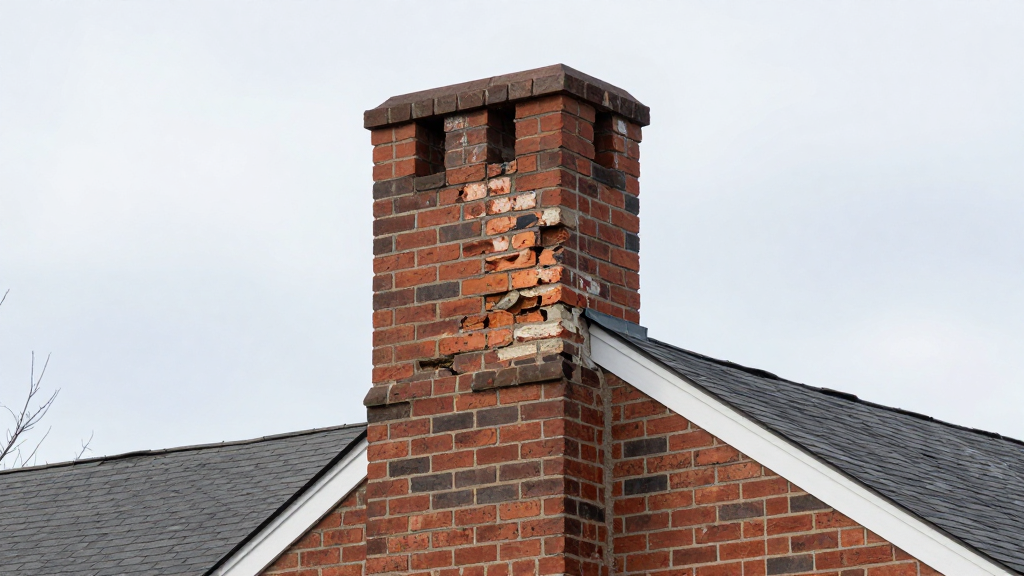
What you see: Brick faces popping off, crumbling mortar, or small piles of red dust and brick fragments at the base of the chimney.
The cause: Moisture is almost always the culprit. Water saturates the brick, freezes inside the pore structure, and forces the face of the brick to separate. Mortar joints soften and erode from the same cycle. On chimneys in Bogota that have never had a waterproof sealant applied, this process accelerates once the original mortar loses its integrity.
The fix: We remove deteriorated mortar to a minimum depth of about three-quarters of an inch and repoint with mortar that matches the original in composition and flexibility. Using a mortar that’s too hard (a common DIY mistake) actually causes more cracking because it doesn’t flex with the chimney. Severely spalled brick has to be replaced, not patched with hydraulic cement. After repointing, we apply a vapor-permeable waterproof sealant so the masonry can still breathe without absorbing water.
Can this be prevented? Yes. A waterproof sealant applied every five to seven years, combined with an annual inspection, catches mortar erosion before it becomes a repointing job and before repointing becomes a rebuild.
Cracked or missing chimney crowns
What you see: Visible cracks across the flat or sloped concrete cap at the top of the chimney. Sometimes chunks are missing entirely.
The cause: Most crowns on older Bogota homes were poured with standard concrete mix instead of the flexible, weather-rated compounds used today. Standard concrete shrinks as it cures and cracks under thermal stress. Once a crack opens, water gets in, freezes, and the crack widens. A failed crown is one of the fastest paths to interior water damage because it channels rain directly into the flue and the chimney’s inner structure.
The fix: Small cracks (under a quarter inch) can be sealed with a flexible crown repair compound. Larger failures or crowns that are structurally compromised need to be removed and replaced. We form and pour a new crown with a slight overhang and a drip edge so water sheds away from the chimney face rather than running down the brick.
The common mistake: Homeowners patch crown cracks with standard caulk from a hardware store. That caulk doesn’t bond well to concrete under freeze-thaw stress and fails within one season, usually making the underlying crack wider.
Damaged or missing flashing
What you see: Water stains on the ceiling or walls near the fireplace, especially after rain. Sometimes visible rust or lifted metal at the roofline where the chimney meets the roof.
The cause: Flashing is the metal seal between the chimney and the roof. It has two layers: step flashing woven into the shingles and counter-flashing set into the mortar joints. When the mortar holding the counter-flashing erodes (very common on older Bogota chimneys), the flashing lifts and water runs straight in. We see this frequently on homes in Oradell and River Edge with the same roof age and chimney construction.
The fix: We remove the counter-flashing, re-cut the mortar joints to the right depth, reset the flashing in fresh mortar, and seal with a high-temperature flashing sealant. If the step flashing was installed incorrectly to begin with, which we do see on chimneys that have had previous roof work done by roofers who weren’t chimney specialists, it may need to be replaced entirely.
The common mistake: Applying roofing tar over the flashing joint. It looks like a repair but it traps moisture, accelerates rust, and fails within a year or two.
Deteriorated or missing flue liner
What you see: White staining on the exterior brick (efflorescence), a smoky smell in the house when the fireplace isn’t in use, or visible cracks inside the flue when we do an inspection.
The cause: Clay tile liners crack from heat stress and from the acidic condensate that oil and gas appliances produce. Many older Bogota homes still have unlined chimneys or liners that have never been inspected. According to the Chimney Safety Institute of America (CSIA), a damaged or missing liner is one of the leading factors in chimney-related house fires and carbon monoxide intrusion.
The fix: We assess liner condition as part of our chimney inspection service, using a camera to see what’s happening inside the flue. Cracked clay tile liners can sometimes be repaired with a poured or cast-in-place liner system. More extensive damage calls for a stainless steel liner insert, which also brings the flue sizing in line with the connected appliance. NFPA 211 (the standard current to 2026) requires that chimneys serving solid-fuel appliances have a correctly sized, intact liner.
The common mistake: Assuming a liner is fine because the fireplace “draws okay.” A liner can have significant cracks and still draft. The fire hazard and carbon monoxide risk exist regardless of draft performance.
Failed or absent chimney cap
What you see: Animals nesting in the flue, water stains, or debris in the firebox. Sometimes the cap has simply blown off in a windstorm.
The cause: Caps keep rain, birds, squirrels, and debris out of the flue. When they’re missing or the mesh screen has rusted through, the flue becomes an open funnel. We’ve found raccoon nests, deteriorated bird nests, and years of leaf accumulation in uncapped flues in Bogota and Fairview alike. Animal nesting material is highly flammable and can block the flue entirely.
The fix: We install a stainless steel cap sized to the flue opening with a mesh screen rated to keep out animals without restricting airflow. If animals have already nested, the flue needs to be swept and inspected before the fireplace is used again.
Can this be prevented? A cap with a good screen and annual inspection is about as low-cost a form of prevention as there is in chimney maintenance. Replacing a cap costs a fraction of what it costs to remove a large nest, clean the flue, and repair any liner damage the animals caused.
Schedule Your Chimney Repair Estimate
If your Bogota home has a fireplace or wood stove you plan to use this winter, now is the right time to find out what condition your chimney is actually in. According to the CSIA, chimneys should be inspected at least once per year. We offer level 1 and level 2 chimney inspections along with masonry repair and repointing and chimney relining for Bergen County homeowners. We work throughout the area, including Leonia, Englewood Cliffs, and Cliffside Park, and we give straightforward estimates with no pressure.
Use our website contact form to request a free estimate. We’ll tell you exactly what we find and what it will take to fix it.
Frequently Asked Questions About Chimney Repair in Bogota NJ
How much does chimney repair cost in Bogota NJ?
Costs vary significantly depending on what needs to be done. A basic mortar repointing job on a standard two-story Bogota home typically runs a few hundred to a couple thousand dollars depending on the extent of deterioration. Flashing replacement, crown rebuilding, and liner installation each carry their own costs. The only way to get an accurate number is an in-person inspection. We provide free written estimates so you know what to expect before any work begins.
How do I know if my chimney needs repair or just cleaning?
Cleaning (sweeping) removes creosote and debris from the flue. Repair addresses structural problems: cracked mortar, failed crowns, damaged liners, and leaking flashing. Many chimneys need both. A level 1 inspection, which is a visual check of accessible areas, will tell you whether you have structural problems on top of a cleaning need. We always inspect during a sweep so nothing gets missed.
Can I use my fireplace if I suspect chimney damage?
No. A damaged liner, blocked flue, or failed crown can allow heat, smoke, and carbon monoxide to migrate into living spaces. The CSIA and NFPA 211 are both clear that a chimney in unknown or questionable condition should not be used until it has been inspected. This is not a situation where it’s safe to run one fire and see what happens.
How long does chimney repointing last?
Done correctly with the right mortar mix, repointing should last 20 to 30 years under northern New Jersey conditions. Using a mortar that’s too hard or too soft relative to the existing brick will shorten that considerably. We match mortar composition to the original masonry, which is a step that gets skipped in a lot of quick patch jobs.
Does homeowners insurance cover chimney repair in New Jersey?
Standard homeowners policies in New Jersey generally cover sudden, accidental damage, like a chimney struck by lightning or damaged in a storm. They typically don’t cover deterioration from age or lack of maintenance. If you have storm or impact damage, document it before any repair work and contact your insurer. We can provide written reports to support insurance claims when applicable.
How often should a Bogota homeowner have the chimney inspected?
The CSIA recommends at least one inspection per year, regardless of how often the fireplace is used. For homes with wood-burning appliances used regularly through Bergen County winters, we’d say an annual sweep and inspection is the minimum. If you’ve recently bought a home in Bogota and have no inspection records for the chimney, a level 2 inspection is the right starting point.
Related from Teaneck Chimney: Chimney Inspection in Teaneck, NJ · Chimney Sweep in Bogota