
Essential Chimney Inspection Teaneck NJ: 2026 Guide for Cliffside Park Residents
Late October in Cliffside Park, and the first cold front off the Hudson has people reaching for the thermostat and, a week later, calling us. Every fall we hear the same question, usually after a homeowner has already lit a few fires: “Does the chimney actually need to be inspected, or is that just something companies say?” The honest answer is that a chimney inspection in Teaneck NJ and throughout Bergen County costs far less than the problems it catches. What we want to do here is walk you through those problems plainly, explain how we diagnose them, and tell you what the work actually costs so you’re not guessing.
A Cliffside Park Call That Set the Tone Last Winter
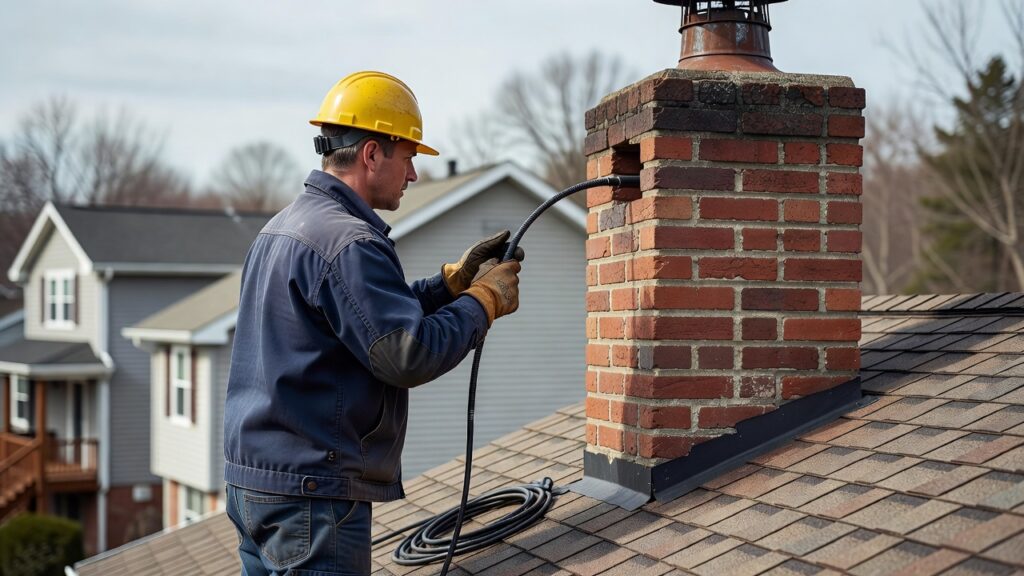
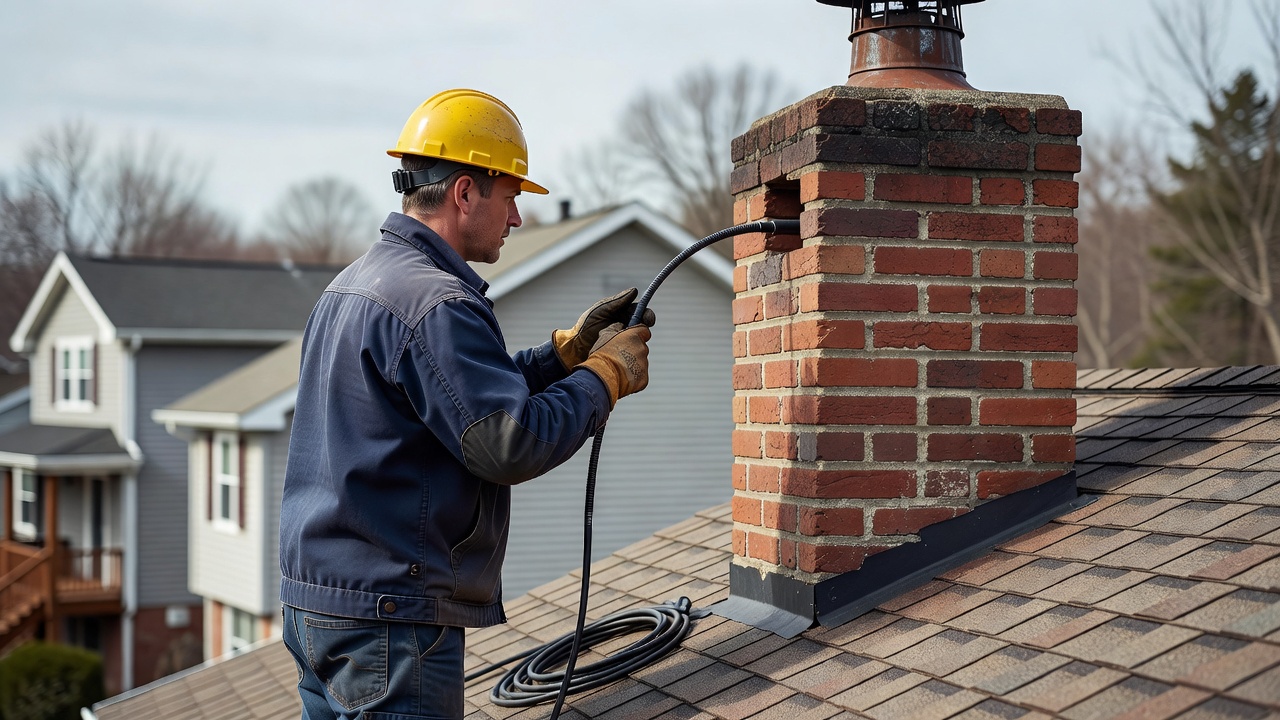
A homeowner in Cliffside Park contacted us in January 2026 after noticing a faint burning smell in her second-floor hallway, even when the fireplace downstairs wasn’t in use. She’d had the flue swept two years earlier by a different company and assumed everything was fine. When our technician completed a Level 2 inspection — camera and all we found a section of the clay tile liner had sheared completely, likely from repeated freeze-thaw stress against her aging mortar crown. Combustible gases were migrating through the breach toward the framing cavity. The liner replacement resolved it. The inspection that flagged the problem cost her $249. The alternative ignoring a smell she couldn’t quite place didn’t bear thinking about.
That story isn’t unusual here. Cliffside Park’s housing stock runs heavily toward pre-1970 brick construction, and those chimneys have decades of thermal cycling, wet winters, and deferred maintenance behind them. So do a lot of homes in neighboring Fort Lee, Fairview, and Palisades Park. We see the same patterns repeatedly, and understanding them is the first step toward knowing what an inspection will cost you and why.
The Six Problems We Actually Find and How We Diagnose Each One
1. Cracked or Collapsed Clay Tile Liner
Symptom: smoke smell in living spaces when the fireplace isn’t in use, or visible dark staining on exterior masonry above the roofline. Clay tile liners expand and contract with heat. After enough cycles — especially in an older Cliffside Park or Fort Lee rowhouse they crack longitudinally, spall, or shift at the joints. We diagnose this with a closed-circuit camera run from the top of the flue down. There’s no reliable way to assess liner integrity from the firebox opening alone; anyone telling you otherwise is guessing. Fix: partial or full relining, either with a stainless steel flexible liner or a poured-in-place system depending on the flue geometry. Our chimney relining service page covers both options in detail.
2. Deteriorated Mortar Crown
Symptom: white efflorescence streaking down the chimney face, water sounds in the chase during rain, or visible cracking across the flat crown at the top. The crown is the concrete or mortar slab that seals the top of the chimney masonry around the flue tile. It takes the brunt of Bergen County’s freeze-thaw cycles — water saturates a hairline crack, freezes, expands, and the crack widens season after season. Diagnosis is visual from the roof with close-range photos. Fix: crowns with minor surface cracking get a flexible elastomeric sealant; crowns with structural separation need to be broken out and rebuilt. Rebuilding a crown runs $300–$600 depending on chimney width.
3. Creosote at Stage 2 or Stage 3
Symptom: reduced draw, a tar-like odor on humid days, or visible dark glazing inside the firebox. According to the Chimney Safety Institute of America (CSIA), creosote accumulates in three stages the third being a hardened, glazed deposit that standard brushes won’t remove and that ignites at temperatures well below a typical chimney fire. We assess stage during our inspection by probing with a scratch tool and reviewing camera footage. A Stage 1 deposit clears with our standard chimney sweeping service. Stage 2 typically requires rotary cleaning tools and adds $80–$150 to the base sweep cost. Stage 3 is a different conversation entirely and often means chemical treatments followed by mechanical removal across multiple visits.
4. Damaged or Missing Flashing
Symptom: water stains on the ceiling near the chimney chase, especially after heavy rain. Flashing is the metal junction between the chimney masonry and the roof surface. In Cliffside Park’s older homes we often find the original lead flashing has corroded, or step flashing installed without counter-flashing — a shortcut that fails within a few seasons. Diagnosis requires roof access and, often, peeling back a few shingles to see whether the counter-flashing is properly embedded in the mortar joints. Fix: flashing replacement runs $400–$900 depending on chimney perimeter and roofline complexity. Ignoring it routes water directly into the ceiling structure.
5. Spalling Brick and Failed Repointing
Symptom: brick faces popping off the chimney exterior, loose mortar fragments in the firebox or on the roof, white mineral deposits. Water infiltration is almost always the root cause. Once moisture breaches the mortar joints, it migrates into the brick itself, freezes, and the face of the brick fractures outward. According to NFPA 211 (2021 edition, which remains the applicable standard in 2026 for residential appliances), the chimney structure must be maintained to prevent deterioration that compromises the system’s ability to contain combustion byproducts. Diagnosis: we probe mortar joint depth and hardness and document any brick face separation. Fix: masonry repointing for joints that have receded more than a quarter inch; spalled brick replacement where faces have failed. Repointing a typical Cliffside Park chimney runs $600–$1,800 depending on the number of courses affected.
6. Undersized or Obstructed Flue
Symptom: smoke rolling into the room when the damper is open, even with a good draw outside. This one is diagnostic, not just visual. We measure the firebox opening and cross-reference it against the flue’s interior cross-sectional area. NFPA 211 specifies that the flue area should be at least one-tenth of the fireplace opening area for round flues, slightly more for square. A Cliffside Park home that had a fireplace insert removed and the original open-face firebox restored often ends up with a flue that’s now proportioned incorrectly. Obstructions — bird nests, collapsed tile fragments, a damper stuck at half travel show up on the camera. Fixes range from a damper adjustment (minimal cost) to a full flue reconfiguration (significant).
What a Chimney Inspection in Teaneck NJ Actually Costs in 2026
A Level 1 inspection the standard annual check for a chimney in continuous normal use typically runs $129–$199 in our service area, which covers Teaneck, Cliffside Park, Ridgefield Park, Leonia, and the surrounding Bergen County communities. A Level 2 inspection, which includes camera scanning of the entire flue and is required whenever you’re buying or selling a home, or when any change to the system has occurred, runs $225–$350. According to the CSIA, a Level 2 inspection is also the minimum standard after any chimney fire, even a small one you may not have noticed.
What drives the price up: flue length (a three-story home in Fort Lee adds time and equipment), accessibility (a flat-roof townhouse in Palisades Park requires extra roof rigging), and the condition of the chimney when we arrive. If we open the cleanout and find Stage 3 creosote or a collapsed liner, the inspection itself is still the quoted price — but the remediation work is quoted separately, in writing, before we proceed.
What keeps the price down: regular annual maintenance. A chimney that’s been inspected and swept every year takes less time, presents fewer surprises, and costs less across any five-year span than one that’s been ignored and then needs structural work.
Can Any of This Be Prevented?
Most of it, yes. Annual inspections catch liner cracks before they propagate, mortar deterioration before water enters the structure, and creosote before it reaches Stage 2. A quality chimney cap keeps birds and rain out. A properly applied crown sealant every four to five years extends a crown’s lifespan significantly. None of this is exotic — it’s the same logic as gutters and furnace filters. The chimneys that end up needing $3,000 in liner work are almost always ones that went eight or ten years without anyone looking inside them.
If you’re in Cliffside Park, Fairview, New Milford, or anywhere in Bergen County and you’re not sure when your chimney was last inspected, reach out through our website contact form. We’ll schedule a time, give you a clear written assessment, and quote any repair work before we touch anything.
Frequently Asked Questions: Chimney Inspection Teaneck NJ
How often does a chimney need to be inspected?
The CSIA and NFPA 211 both call for at least an annual inspection for any chimney in regular use. In Bergen County, where winters are cold and freeze-thaw cycles are hard on masonry, we generally recommend not skipping years even if you use the fireplace infrequently. A chimney that sits unused still collects moisture and can develop liner or crown issues that only an inspection will catch.
What’s the difference between a Level 1 and a Level 2 inspection?
A Level 1 inspection covers accessible portions of the chimney interior and exterior — the firebox, visible flue, damper, and exterior masonry we can see from the roofline. A Level 2 inspection adds a continuous video scan of the entire flue interior from the firebox to the cap. Level 2 is required when you’re buying or selling a home, after any change to the appliance or fuel type, or following any event that may have stressed the system, including a chimney fire.
Does a chimney inspection include cleaning?
Not automatically. An inspection and a sweep are two separate services, though we often perform them together for efficiency. During the inspection we assess the level of creosote and debris; if cleaning is needed, we quote it on the spot. You’re never automatically charged for a sweep just because one was done — that’s quoted and approved separately.
How long does an inspection take?
A Level 1 inspection on a single-flue fireplace chimney typically takes 45 minutes to an hour. A Level 2 with camera work on a larger system say, a two-flue chimney serving a fireplace and a furnace in an older Cliffside Park home can take 90 minutes or more. We’d rather take the time to do it right than miss something on a rushed visit.
Is a chimney inspection required when buying a home in New Jersey?
New Jersey does not mandate a chimney inspection by statute as part of every real estate transaction, but NFPA 211 specifies that a Level 2 inspection is the appropriate standard whenever a property changes hands. Most experienced real estate attorneys and home inspectors in Bergen County will recommend one as part of due diligence, and mortgage lenders occasionally require it depending on the findings of the general home inspection.
Can I inspect my own chimney?
You can look into the firebox and check the damper, and that’s worth doing. But the flue above the smoke chamber where liner cracks, mortar joint failure, and Stage 2 or 3 creosote actually live is not visible without a camera or a top-down professional assessment. A self-inspection that misses a cracked liner isn’t really an inspection; it’s a guess. The cost of a professional inspection is modest relative to what it catches.
Related from Teaneck Chimney: Chimney Sweep in Teaneck, NJ · Smart Chimney Inspection Englewood NJ