
Smart Timing for Chimney Repair Englewood Cliffs NJ: 2026 Guide for New Milford Residents
Most Bergen County homeowners only think about chimney repair Englewood Cliffs NJ after something goes wrong a spalled brick drops into the firebox, mortar crumbles onto the roofline, or water starts tracking down the flue after a hard freeze. The problem with that approach is that by the time the damage is obvious, the repair window has often narrowed, and contractors are backed up deep into the season. Knowing when to schedule the work and what to expect from start to finish puts you ahead of that curve entirely.
We serve New Milford and the surrounding Bergen County communities every week, and we see the same seasonal patterns repeat themselves year after year. This guide lays out exactly what chimney repair Englewood Cliffs NJ involves at each stage of the calendar, so you can plan around your schedule rather than scramble around ours.
A New Milford Homeowner Who Got the Timing Right
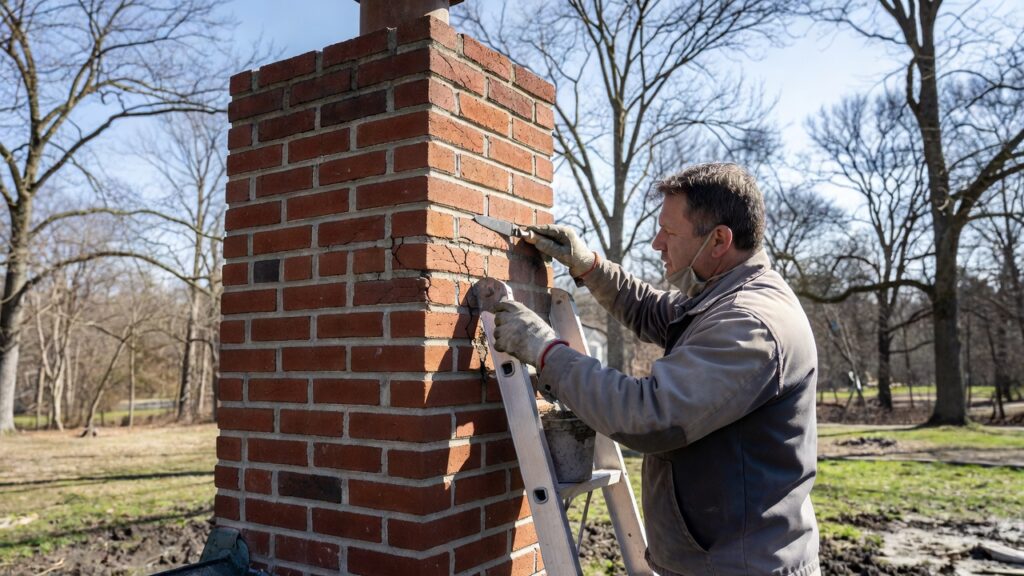
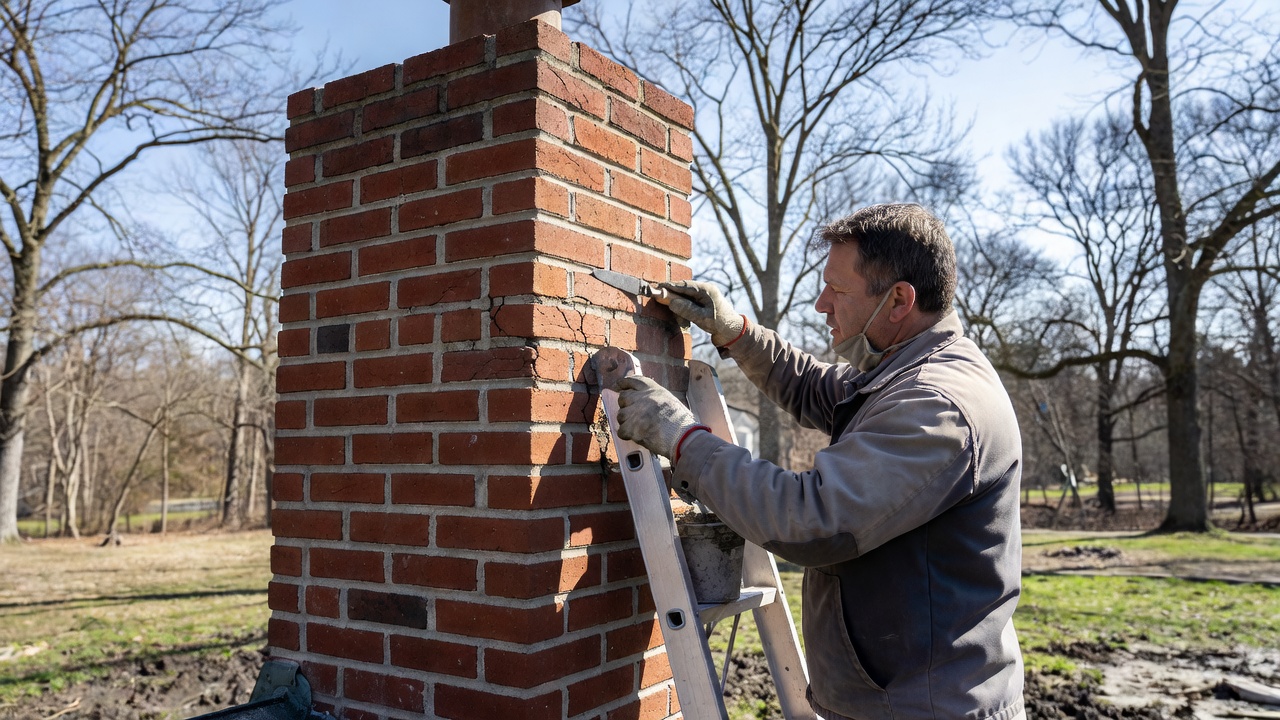
A homeowner on River Vale Road in New Milford called us in late February of last year. She had noticed a thin crack running horizontally across three courses of brick on her chimney’s south-facing side the kind of crack that looks minor but signals moisture has been working its way in through freeze-thaw cycles all winter. She asked if she should wait until spring. We told her: schedule now, work begins when temperatures hold above 40°F consistently, which in Bergen County usually means mid-to-late March. She booked the inspection that week. By early April we had completed a full repointing of the affected section, applied a breathable water repellent, and replaced two cracked bricks above the roofline. She was done before her neighbors even realized chimney season had started. That kind of head start matters in a market where good crews fill up fast.
What Chimney Repair Actually Involves — No Sugarcoating
Before we get into timing, it helps to understand what the job looks like from the first call to the final walkthrough. Chimney repair is not a single task. It starts with a proper inspection at minimum a CSIA-aligned Level 1 visual assessment, and often a Level 2 inspection with camera equipment if we suspect liner damage or hidden deterioration. According to NFPA 211, the standard most inspection and repair work is measured against in 2026, a thorough assessment must precede any significant repair recommendation. We don’t skip that step.
Once the scope is confirmed, repair work typically involves some combination of mortar repointing, brick or stone replacement, crown repair or reconstruction, flashing re-sealing, and if the liner is compromised relining with a stainless steel insert or cast-in-place system. Each phase requires the right temperature and humidity conditions to cure properly. Mortar, for instance, needs ambient temperatures above 40°F for at least 48 hours after application. That single fact drives most of our scheduling advice.
Season by Season: When to Book and What to Expect
Late Winter into Early Spring (February through mid-April)
This is the planning window, not always the work window. February in New Milford and across Bergen County regularly delivers overnight temperatures well below freezing, which rules out fresh mortar work. But February and March are exactly when you should be calling for an inspection and getting on the schedule. Demand is lower, our crews have more flexibility, and you’ll have repair work completed before the summer humidity sets in. By late March and into April, when daytime temperatures stabilize, we can begin most exterior masonry repairs. This is genuinely one of the better stretches of the year for chimney repair Englewood Cliffs NJ booking early here pays off.
Late Spring (mid-April through May)
This is our busiest quality window. Temperatures are consistent, rain is manageable, and mortar cures well. Homeowners in Ridgefield Park, Leonia, and New Milford who book in this stretch get the work done before summer travel disrupts their schedules. Expect lead times of one to two weeks for most crews by late April. If you’re scheduling crown replacement or a full repointing job, mid-April through May is where we’d aim.
Summer (June through August)
Mortar work is still viable, but extreme heat can cause rapid drying that weakens the bond if the mason isn’t careful about mix and hydration. More practically, this is when families in Fort Lee, Bogota, and Oradell are away on vacation and don’t want contractors on the roof. Booking is easier demand softens but full-day jobs in direct sun on a dark brick chimney are genuinely uncomfortable for our crews, and we won’t rush a repair because of the heat. If you have a summer job, plan for early-morning start times.
Early Fall (September through mid-October)
Arguably the best conditions of the year for exterior masonry work. Temperatures are mild, humidity drops, and mortar cures at an ideal pace. This is also, unfortunately, our most compressed window: every homeowner in Bergen County who wants the fireplace ready for November is calling in September. According to the Chimney Safety Institute of America, homeowners should schedule inspections and any necessary repairs before the heating season begins a recommendation that, when everyone follows it at once, creates real bottlenecks in October. If you want a fall appointment, call in August.
Late Fall and Winter (mid-October through January)
This is the worst time to discover you need chimney repair Englewood Cliffs NJ, and it happens constantly. We get calls from Cliffside Park to New Milford every November from homeowners who lit their first fire of the season and noticed something wrong. Interior work damper replacement, smoke chamber parging, liner repair can proceed in cold weather. Exterior masonry repair largely cannot, unless temperatures cooperate and we take extra precautions with heated enclosures. Expect higher costs and longer scheduling delays. Some repairs will be deferred to spring, which means your chimney may be out of service for months.
What Happens When You Wait Too Long
A hairline crack in the mortar joints of a New Milford chimney in October becomes a broken brick by February. Water enters the crack, freezes, expands, and does work that no repair crew asked for. According to the CSIA, water is the leading cause of chimney deterioration more damaging over time than smoke, creosote, or fire. A repointing job that costs $800 to $1,200 on a modest chimney in the spring can become a full crown reconstruction and partial brick replacement job at $3,000 or more if deferred through a second northern New Jersey winter. We’re not trying to alarm anyone. We’re telling you what we see happen regularly in communities from Maywood to Englewood Cliffs.
The other consequence of waiting is that the heating season arrives and you’re using a fireplace or heating appliance that hasn’t been cleared for use. NFPA 211 is explicit that appliances must be inspected and in sound condition before operation. That’s not a technicality it’s the basis on which homeowner’s insurance claims get evaluated if something goes wrong.
Ready to Get on the Schedule?
Whether your chimney needs a straightforward repointing or a more involved repair, the best move is a professional assessment first. Our team serves New Milford and communities across Bergen County. We’ll tell you honestly what we find, what it will take to fix it, and when the timing makes the most sense for the work to be done right. Reach out through our website contact form to request a free estimate no pressure, just a straight answer from people who do this every day.
Frequently Asked Questions About Chimney Repair in Bergen County
How long does chimney repair Englewood Cliffs NJ typically take from start to finish?
It depends on the scope. A focused repointing job on two or three courses of brick usually takes one day on-site. A full crown rebuilds combined with flashing replacement and waterproofing might run two days. The longer timeline is really the scheduling and curing period mortar needs at least 48 hours to cure properly before the chimney should see heavy use, and we always build that into our project timeline.
Can chimney repairs be done in the winter in New Milford?
Interior repairs damper work, smoke chamber parging, liner installation can generally proceed year-round. Exterior masonry work is temperature sensitive. We need sustained temperatures above 40°F during application and curing. In a Bergen County winter, that’s not always possible, so some exterior repairs get deferred to spring. The earlier you call, the more options you have.
What’s the difference between a Level 1 and Level 2 chimney inspection before a repair?
A Level 1 inspection is a visual assessment of accessible areas the firebox, the accessible flue, the exterior above the roofline. It’s appropriate when the chimney has been in normal service with no changes. A Level 2 inspection uses camera equipment to examine the full interior of the flue and is required, per NFPA 211 guidelines, when there has been a change in fuel type, an event like a chimney fire, or when a property changes ownership. Before significant repair work, we almost always recommend at minimum a Level 1 and often a Level 2, so we know exactly what we’re dealing with.
Is chimney repair covered by homeowner’s insurance?
Sometimes. Sudden damage caused by a covered event a lightning strike, a windstorm, an accidental chimney fire is often covered. Gradual deterioration from weathering, deferred maintenance, or freeze-thaw damage generally is not. Your insurer will want documentation, which is one more reason a written inspection report matters before repair work begins. We can provide detailed condition reports to support a claim if that’s relevant to your situation.
How do I know if I need a full rebuild versus a repair?
If the structural bricks are sound and the damage is confined to the mortar joints, the crown, or isolated brick faces, repair is almost always the right call. If the chimney structure itself has shifted, if bricks are spalling throughout multiple sections, or if the liner is severely damaged, the scope grows. We give honest assessments we’re not in the business of recommending a rebuild when a repair will do the job and last just as long.
What should I do right now if I see cracking on my chimney?
Don’t wait to see if it gets worse over the winter it will. Take a photo of the area showing the crack location and approximate size, then request an inspection. A hairline crack in mortar is often a straightforward repointing job. The same crack after another freeze-thaw winter is a different conversation. The sooner we can assess it, the more options you’ll have for timing and cost.
Related from Teaneck Chimney: Chimney Inspection in Teaneck, NJ · Smart Timing for a Chimney Sweep Ridgefield Park NJ · Smart Chimney Inspection Englewood NJ