
Warning Signs You Need a Chimney Sweep Leonia NJ Homeowners Should Never Ignore
Most chimneys don’t fail quietly. They give warnings some obvious, some easy to dismiss as “probably nothing.” The problem is that in Bergen County’s climate, where a cold snap in January can be followed by a thaw and then another hard freeze, small chimney problems compound fast. A chimney sweep in Leonia NJ, or right here in Maywood, is not just a cleaning visit. It is the inspection that catches those warnings before they become expensive or dangerous.
Below is what we actually see on the job specific, observable signs that something is wrong. We’ve split them into two categories: things that need a call today, and things worth scheduling promptly but not panicking over.
A Maywood Homeowner Who Almost Waited Too Long
A homeowner on a side street in Maywood reached out to us in February 2026. They’d noticed a faint smoky smell lingering in their living room after fires but figured their damper just needed adjusting. When our technician arrived and ran through a Level 1 inspection part of every chimney sweep, we complete he found a partially blocked flue from a bird nest that had settled in the previous spring, plus a cracked terra-cotta liner tile. Two problems, neither visible from the firebox without the right equipment. Both were fixable, but another season of heavy use could have pushed creosote into that crack and into the surrounding framing. That’s the difference between a cleaning visit and a real inspection.
Signs That Mean Call Us Now
1. Smoke Entering the Room During or After a Fire
This is not a draft quirk. When smoke backs into your living space, the flue is obstructed, the damper is damaged, or there is a serious pressure issue in the home. None of those self-correct. Carbon monoxide which you cannot see, or smell travels the same path smoke does. According to the Chimney Safety Institute of America (CSIA), a blocked or deteriorated flue is one of the leading contributors to residential carbon monoxide exposure from wood-burning appliances. Do not light another fire until we’ve looked at it.
2. A Strong, Oily or Asphalt-Like Smell Coming from the Fireplace
That smell is heavy creosote specifically third-degree creosote, the glazed, tar-like stage that is extremely difficult to remove and highly flammable. Standard brushing won’t touch it. It requires chemical treatment before any mechanical cleaning. If your firebox smells like a road crew just paved your living room, that is not normal wood smoke odor. It means buildup has progressed well beyond what a single sweep can address without extra steps.
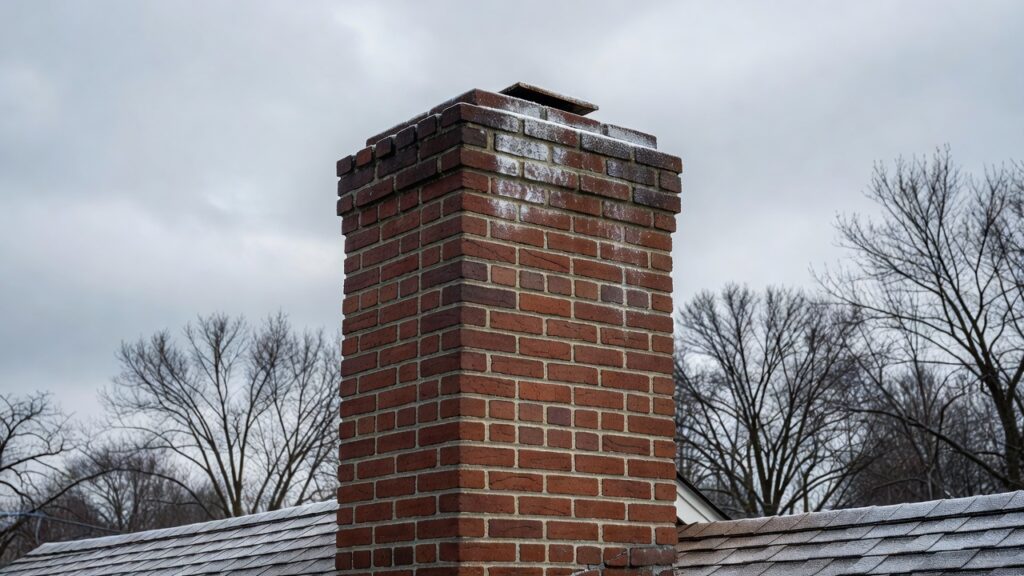
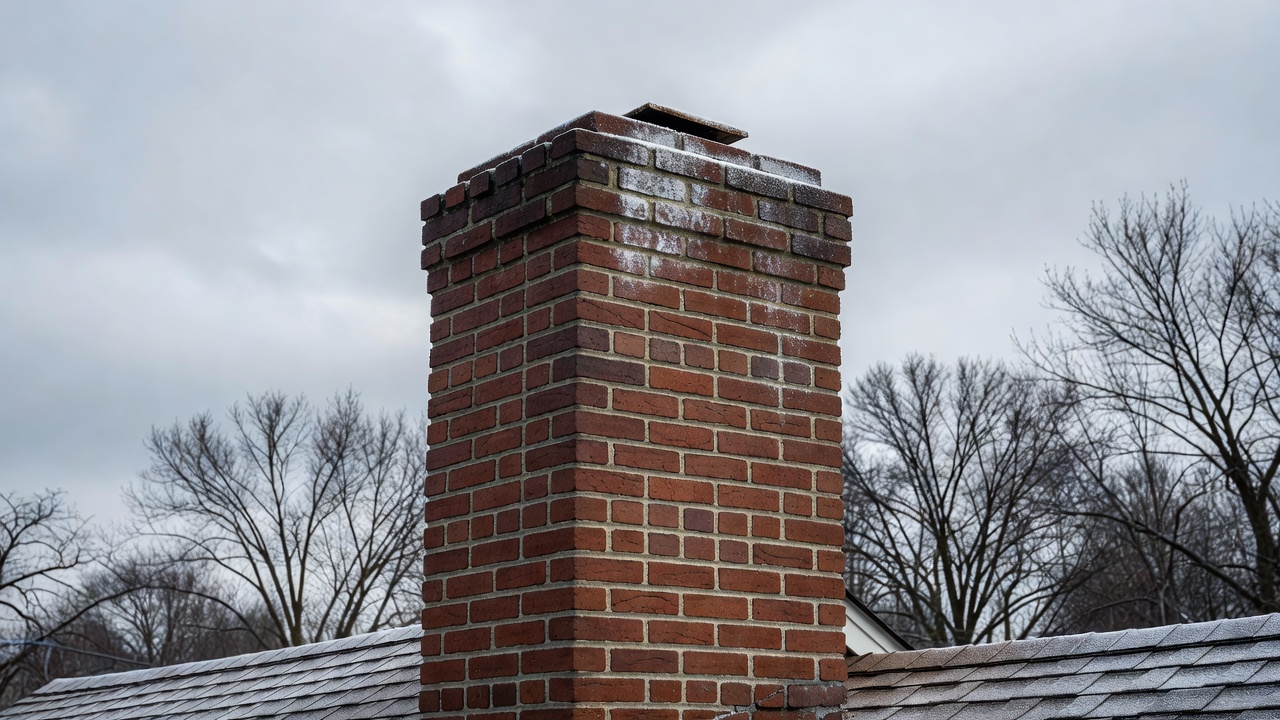
3. White Staining on the Exterior Masonry (Efflorescence)
White chalky streaks on your chimney’s brick face mean water are moving through the masonry and carrying dissolved salts to the surface. In Maywood and neighboring Leonia, where freeze-thaw cycles hit brick hard from November through March, efflorescence is often the first visible sign of spalling to come. Left alone, the brick faces begin to pop off. We see this pattern repeatedly on homes in Ridgefield Park and River Edge with chimneys that haven’t been waterproofed. It won’t get better on its own.
4. Visible Cracks in the Firebox Interior or Smoke Chamber
Crouch down and look up into your firebox with a flashlight. Cracks in the refractory panels or mortar joints inside the firebox are a direct path for heat to reach combustible framing. NFPA 211, the 2024 edition (current through 2026 under the standard’s adoption cycle), requires that the entire flue system including the firebox — be free of deterioration that would allow heat transfer to adjacent materials. Cracks you can see with the naked eye have already passed the point of “keep an eye on it.”
5. Chunks of Tile or Debris in the Firebox
If you’re finding small pieces of clay or ceramic in the ash bed, your liner is breaking down from the inside. Terra-cotta liner sections fracture from thermal cycling and age. This is not cosmetic damage. A fractured liner cannot safely contain combustion gases, and relining becomes necessary. We offer chimney liner and relining services and can assess the extent of the damage during the same visit.
Signs Worth Scheduling Soon — Not Ignoring
6. Rust on the Damper or Firebox Components
Surface rust on a cast-iron damper blade is common and does not require an emergency call. But rust that has frozen the damper open or shut, or that has pitted through the metal, means moisture has been getting in consistently and moisture inside the firebox eventually causes far worse problems. Book a sweep and mention it so our technician comes prepared.
7. Water Dripping into the Firebox After Rain
Any water intrusion is worth addressing before next winter. The source could be a failed chimney cap, cracked crown, or compromised flashing. Each has a different fix. What they share is that water sitting in your firebox and flue between fires accelerates every other form of deterioration. Homeowners in Fort Lee and Englewood Cliffs often see this first after a nor’easter strips an aging cap lose.
8. A Fireplace That Has Not Been Cleaned in More Than a Year of Regular Use
According to NFPA 211, chimneys serving wood-burning appliances should be inspected at minimum once per year and cleaned whenever the level of deposits warrants it. If you’ve burned four cords of wood since your last sweep, you’ve almost certainly built up enough creosote to warrant cleaning before the next season. This is maintenance, not an emergency but it becomes urgent the moment you light the next fire without knowing what’s up there.
9. An Unexplained Increase in Heating Bills from a Gas Fireplace or Insert
A restricted flue on a gas appliance makes the unit work harder and vent less efficiently. Homeowners sometimes assume this is a gas pressure or appliance issue when the actual cause is a dirty or obstructed liner. Our chimney inspection service covers gas appliances as well as wood-burning fireplaces the standards and the risks are different, but the inspection matters just as much.
10. Animals Sounds or Nesting Debris Near the Flue Opening
Chimney swifts and raccoons are both attracted to uncapped flues in Bergen County. If you hear chittering, scratching, or notice debris falling into the firebox, the chimney is open to wildlife. A nest is a blockage. We can assess the situation, recommend capping, and clean out any debris as part of a standard sweep visit.
What a Professional Chimney Sweep Actually Involves
When our crew arrives, here’s the honest sequence. We protect your flooring and furniture with drop cloths and use a commercial-grade HEPA vacuum system connected directly to the firebox to maintain negative pressure meaning dust and ash stay contained, not distributed through your living room. We brush the flue from top to bottom using rotary or hand tools matched to the liner material, remove all accessible creosote and debris, and then inspect the firebox, damper, smoke chamber, and accessible liner sections. At the end, you get a clear summary of what we found, what is normal, and what needs attention. There is no pressure to add services just an honest report.
Our technicians also note anything that warrants our masonry repair and repointing services or a more thorough Level 2 chimney inspection, which uses video equipment to see inside the full liner length. Most homeowners need a Level 2 when buying a home, after a chimney fire, or when damage is suspected but not fully visible.
Get a Free Estimate for Chimney Sweep Service in Leonia, Maywood, and Across Bergen County
Whether you recognized one of these warning signs or just know your chimney is overdue, we’re here to help. We serve Maywood, Leonia, Bogota, Ridgefield Park, New Milford, and the surrounding Bergen County communities. Reach out through our website contact form and we’ll get back to you to schedule a visit at a time that works for you. No pressure, no upselling just a straight answer about what your chimney needs in 2026.
Frequently Asked Questions: Chimney Sweep Leonia NJ and Maywood Area
How often should I have my chimney swept if I use my fireplace regularly?
NFPA 211 recommends at minimum one inspection per year for any chimney connected to a wood-burning appliance. If you burn more than two cords of wood in a season, or use lower-moisture firewood inconsistently, cleaning may be needed more than once. We assess the actual deposit level during every visit and give you an honest recommendation based on what we find.
What does a chimney sweep cost in the Leonia and Maywood area in 2026?
Pricing in Bergen County typically ranges from $150 to $275 for a standard wood-burning fireplace sweep and Level 1 inspection, depending on the flue configuration, the amount of buildup, and access conditions. Heavier creosote deposits, two-story flues, or add-on services like cap installation or minor crown repair will adjust the final number. We provide a written estimate before any work begins.
Is there a difference between a chimney sweep and a chimney inspection?
Yes, and the difference matters. A sweep is the cleaning removing creosote, soot, and debris from the flue. An inspection is the systematic assessment of the chimney’s condition. We include a Level 1 inspection with every sweep, which covers accessible components. A Level 2 inspection adds video scanning of the liner interior and is required in certain situations, including real estate transactions or after any chimney fire.
Can I use my fireplace if I see white staining on the outside of the chimney?
Efflorescence on its own doesn’t mean the flue is unsafe to use immediately, but it does mean water is penetrating the masonry, and that process is causing damage each time temperatures cycle. We recommend scheduling an inspection before relying on the fireplace through another full winter, particularly if the staining is new or spreading.
What causes that smoky smell in the house even when we haven’t had a fire recently?
This is almost always a negative air pressure issue combined with a creosote-saturated flue. Modern, well-sealed homes can pull air down through the chimney rather than letting it rise out. That draft reversal carries the smell of built-up creosote into the living space. A sweep removes the odor source, and in some cases a top-mount damper or air-supply adjustment solves the draft problem. We can identify which applies during the inspection.
Do you service gas fireplaces as well as wood-burning ones?
We do. Gas appliances have their own inspection and venting requirements under NFPA 211, and the flue liners used with gas inserts can deteriorate from condensation and corrosive byproducts. Annual inspection of a gas fireplace or insert is just as important as for a wood-burner the fuel is different, but the need for a clear, intact flue is not.
Related from Teaneck Chimney: Urgent Warning Signs You Need a Chimney Sweep Bogota NJ and Oradell Ho · Chimney Inspection in Teaneck, NJ