
What Most Homeowners Get Wrong About Chimney Repair: 2026 Guide for Bogota NJ and Bergen County Residents
Most chimney problems we find in Bogota, Teaneck, and the wider Bergen County area did not start last winter. They started two or three winters before that, when something small was ignored or more often misread by a well-meaning homeowner who thought they were handling it. Chimney repair in Bogota NJ is our bread and butter, and nearly every job we take on comes with a familiar story: a visible crack, a smell, or a stain that was explained away until it couldn’t be anymore.
Below we walk through the six most common problems we diagnose on local chimneys, what actually causes each one, how we fix them, and critically what the homeowner had usually done wrong before we arrived. Not to shame anyone. Just to help you avoid the same path.
A Bogota Homeowner Who Almost Made It Worse
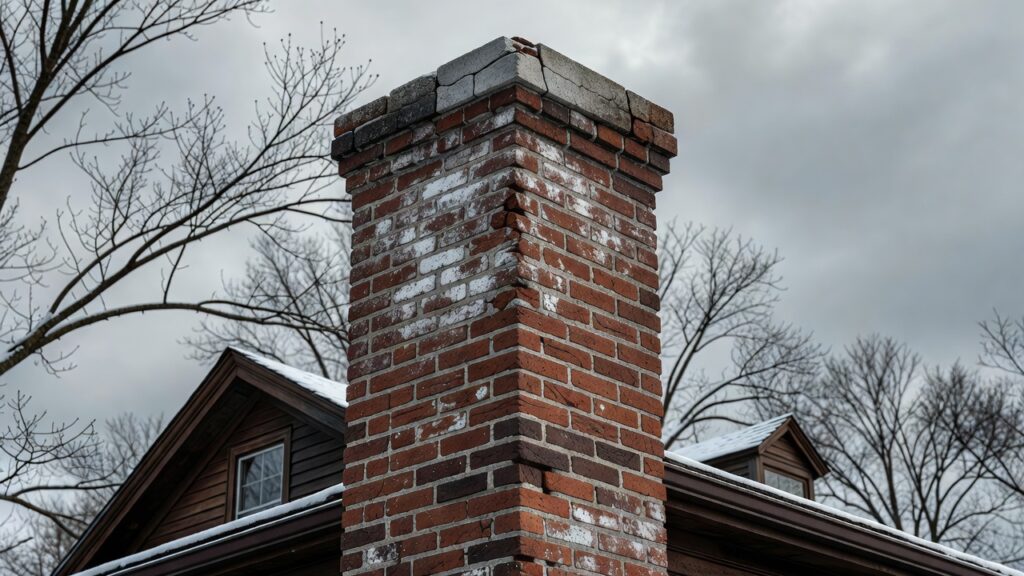
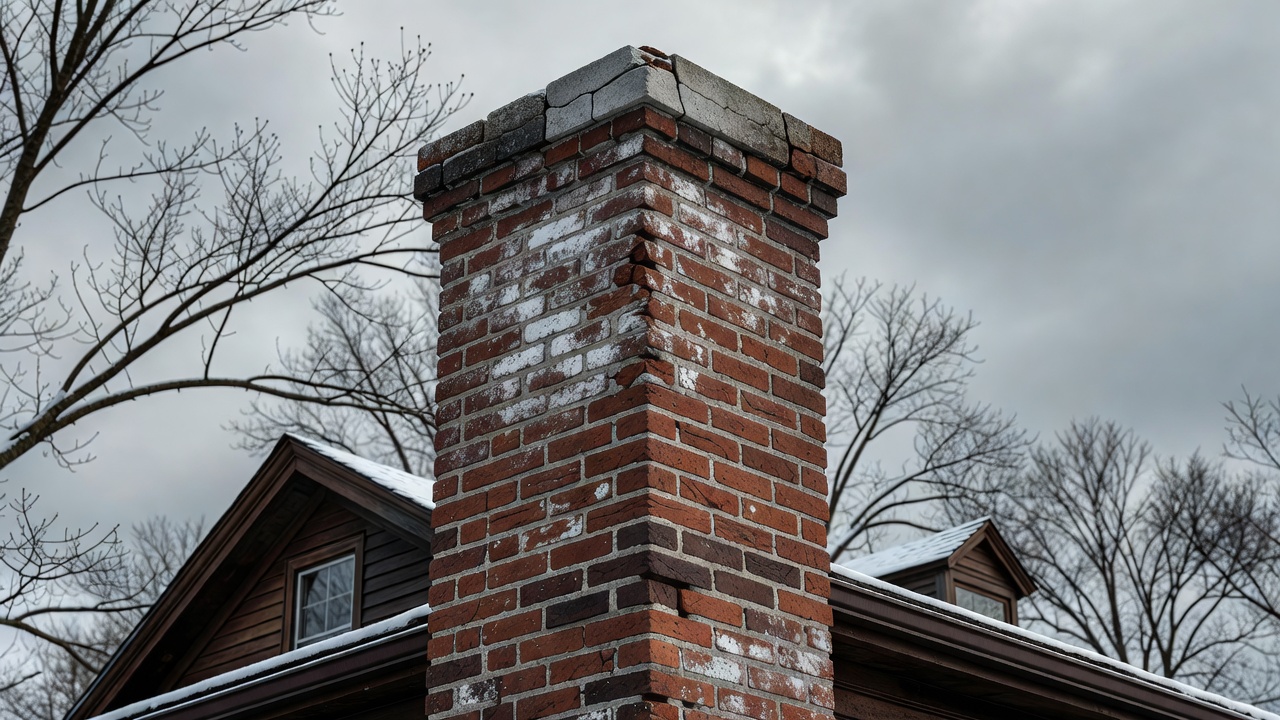
Last February, a homeowner on a well-traveled street in Bogota called us after noticing white streaking across the front of their chimney and a musty odor in the living room every time the furnace kicked on. They had already purchased a tube of exterior masonry sealant from a big-box store and sealed the bricks themselves the prior autumn. When we arrived, we found that the sealant had actually trapped moisture inside the brick accelerating the spalling damage it was meant to prevent. The crown was cracked, water had been entering for at least two seasons, and the liner showed early signs of deterioration. What started as a straightforward crown repair had grown into a three-part job. We see this sequence more often than we’d like.
Six Problems, and the Mistakes That Made Them Worse
1. Spalling Brick — Treated with the Wrong Sealant
Spalling where brick faces pop or flake away is one of the most visible signs of water damage. Freeze-thaw cycling through a Bergen County winter is brutal on porous masonry. When water saturates brick and then freezes, it expands roughly nine percent in volume. Do that repeatedly across a Teaneck or Bogota winter and the brick face eventually separates.
The mistake we most often see: homeowners apply a film-forming sealant that prevents the brick from breathing. Trapped moisture has nowhere to go, so damage accelerates behind a surface that looks fine from the street. The correct fix is a vapor-permeable water repellent one that blocks liquid water but allows vapor transmission applied after the damaged brick is cut out and replaced with period-appropriate replacement units. We also inspect the mortar joints at this stage, because spalling brick almost always arrives alongside failing mortar.
Can this be prevented? Yes. A professional water repellent application every four to six years, combined with a level 1 chimney inspection annually, catches early spalling before the brick face gives way.
2. Cracked Chimney Crown — Confused for a Flashing Problem
The chimney crown is the concrete cap that covers the top of the masonry structure around the flue. When it cracks, water runs straight into the chase. We find cracked crowns on probably sixty percent of the older homes we service in places like Leonia and Ridgefield Park many of them built in the 1940s and 1950s with crowns that were originally poured too thin or without a proper drip edge.
The mistake here is misdiagnosis. Homeowners notice water staining on the ceiling near the fireplace and assume the flashing has failed. Sometimes it has. But if the crown is also cracked and we check both patching the flashing alone will not stop the leak. We use a thorough visual inspection from the roofline and, where conditions warrant, a level 2 chimney inspection with camera to see exactly where water is entering. Crown repair on a standard Bogota-area chimney typically involves removing the failed crown entirely and pouring a new one with a proper overhang. Partial patches rarely last more than one or two seasons in this climate.
3. Deteriorating Mortar Joints — Repointed Too Wide
Tuckpointing or repointing is the process of removing failed mortar and replacing it. According to NFPA 211 (2021 edition, the standard currently in force through 2026), mortar joints are a critical component of chimney structural integrity and must be maintained to prevent water infiltration and structural failure. The problem is not always that homeowners skip the repair it’s that they hire a general mason or do it themselves and the new mortar goes in too wide, too proud of the brick face, or with the wrong mortar mix. A mortar that is harder than the surrounding brick will cause the brick itself to crack rather than allowing the mortar joint to flex and absorb movement. In our area, Type S mortar is generally appropriate for above-grade chimney work. We match the original joint profile, width, and finish so the repair blends and behaves correctly over time.
4. Damaged Flashing — Sealed Over Instead of Replaced
Step flashing and counter-flashing at the chimney-roof junction are the first line of defense against water entry. They corrode, pull away from the masonry, and develop gaps over years of thermal movement. The shortcut we undo on a regular basis especially in Fort Lee and Cliffside Park, where roofline repairs tend to be done quickly by general roofers is a thick bead of roof cement applied over the gap. It looks like a fix. It holds for a season, maybe two. Then it cracks, and now water has been channeling behind it for months before anyone notices the ceiling stain.
Proper flashing repair means removing the old material, re-bedding step flashing in fresh mortar, and installing counter-flashing that is set into a cut reglet in the masonry. Sealant alone is never the final answer it is at best a temporary bridge while a real repair is scheduled.
5. A Failing Liner — Discovered Too Late
The flue liner contains combustion gases and channels them safely out of the home. According to the Chimney Safety Institute of America (CSIA), a damaged liner is one of the leading contributors to chimney-related house fires and carbon monoxide incidents. In older Bogota and Englewood homes with terra cotta tile liners, the tiles crack from thermal shock, from years of acidic condensate, or simply from age. Homeowners rarely know there is a problem until a level 2 inspection with a camera reveals it.
The mistake we see is continuing to use a fireplace or gas appliance after a level 1 inspection reveals draft or odor issues, assuming a sweep will resolve it. Draft problems and flue odor are often symptomatic of liner failure. A camera inspection is the only reliable way to assess liner condition. Where tile liners are compromised, we typically recommend a stainless-steel liner system appropriately sized for the appliance as the most durable long-term solution.
6. Chimney Cap Absent or Undersized — Dismissed as Optional
A chimney cap covers the flue opening at the top of the stack. It keeps rain, birds, squirrels, and windblown debris from entering the flue. We have pulled out nesting material, leaves, and in one memorable Englewood job, a deceased raccoon, from uncapped chimneys. The CSIA considers a properly fitted chimney cap a fundamental component of chimney protection, not an add-on.
The common mistake is treating a cap as optional particularly on chimneys that are no longer used for a wood-burning fireplace but still vent a gas appliance or furnace. Even an infrequently used flue needs protection from moisture and animal intrusion. Replacement caps should be sized correctly for the flue and secured so they cannot lift in a high-wind event, which is not unusual on the Bergen County ridgeline.
What Chimney Repair in Bogota NJ Actually Costs in 2026
We are asked about pricing on nearly every call. Honest answer: it depends on what the inspection finds. A straightforward crown rebuild on a single-flue chimney in Bogota or New Milford typically runs in the range of $400 to $700. Full repointing on a two-story chimney with significant mortar loss can reach $1,200 to $2,000 depending on access and the extent of damage. Liner replacement with a stainless steel system generally falls between $2,500 and $4,500 for a standard installation. These are representative ranges, not quotes every chimney is different, and we will not know the true scope until our technicians are on the roof. We encourage homeowners to be skeptical of any estimate given sight-unseen.
Talk to Us Before You Spend Another Season Wondering
We serve Bogota, Englewood, Teaneck, and the surrounding Bergen County communities, and we have seen what happens when small problems are patched the wrong way or put off another season. If your chimney has visible cracks, staining, a persistent odor, or if you simply haven’t had it looked at in a few years, reach out to us through our website contact form. We offer free estimates and honest assessments no upsell pressure, just a straight read of what your chimney needs. Our team handles everything from a basic sweep to full liner replacement, and we will tell you plainly what can wait and what cannot.
Frequently Asked Questions: Chimney Repair in Bogota NJ and Bergen County
How do I know if my chimney needs repair rather than just a cleaning?
A cleaning removes soot and creosote. Repair addresses structural or material failure. If you have visible cracks in the masonry, white efflorescence on the brick exterior, water staining on interior ceilings or walls near the fireplace, or a persistent smoky or musty odor, those are signs something is wrong beyond what a sweep will fix. We recommend a level 1 inspection annually it’s the fastest way to separate a cleaning need from a repair need.
Can I use my fireplace while waiting for chimney repair?
It depends entirely on what is wrong. A cracked crown or minor repointing work may not require you to stop using the fireplace immediately, but a compromised liner, damaged flashing, or significant structural cracking are conditions under which you should not operate the appliance until repairs are complete. We will always tell you clearly at the time of inspection whether use should be suspended. Do not rely on a general rule here the answer is specific to your chimney’s condition.
How often should a Bergen County homeowner schedule chimney maintenance?
NFPA 211 recommends that chimneys, fireplaces, and vents be inspected at least once a year and cleaned as conditions warrant. In our climate with its significant freeze-thaw cycling from December through March annual inspection is the minimum we recommend. Chimneys serving gas appliances need just as much attention as wood-burning ones; the byproducts of gas combustion are corrosive to liner materials over time.
What is the difference between a level 1 and a level 2 chimney inspection?
A level 1 inspection covers the accessible portions of the chimney exterior and interior what our technicians can see without specialized equipment. It is appropriate for a chimney in regular service with no changes to the appliance or fuel type. A level 2 inspection includes a video camera scan of the flue interior and is required any time there has been a change in the appliance, a chimney fire, or a real estate transaction. We recommend a level 2 whenever draft or odor issues suggest a liner problem that a visual inspection alone cannot confirm.
Why is there white staining on the outside of my chimney?
That white residue is called efflorescence mineral salts carried to the brick surface by water moving through the masonry. It is a reliable indicator that water is getting into the chimney structure somewhere. The stain itself is not dangerous, but the source of water causing it often is. Efflorescence on a Bogota or Englewood chimney should prompt a professional inspection to find where moisture is entering crown, flashing, mortar joints, or the brick face itself.
Does homeowner’s insurance cover chimney repair?
Most standard homeowner’s policies cover sudden and accidental damage a falling tree limb that damages the chimney cap, for example. They generally do not cover deterioration from lack of maintenance, which is how most chimney problems are classified. We can document conditions thoroughly if you plan to file a claim, but we always encourage homeowners to contact their insurer directly for coverage questions. We are chimney technicians, not insurance advisors.
Related from Teaneck Chimney: Urgent Warning Signs You Need a Chimney Sweep Bogota NJ and Oradell Ho · Smart Timing for Chimney Repair Englewood Cliffs NJ