
Honest Answers About Chimney Liner Installation Teaneck NJ: 2026 Guide for Ridgefield Park Residents
Most homeowners who call us about chimney liner installation Teaneck NJ come in with a number in their head usually too low and a set of assumptions that will cost them money if left uncorrected. We see this every week. The liner conversation tends to happen after an inspection flags a problem, and by that point people are already stressed, already reading conflicting things online, and already getting quotes that seem wildly different from one another. This post is our attempt to cut through that noise.
We are not going to list myths with a colon and then debunk them. We are just going to tell you what we have learned doing this work across Teaneck, Ridgefield Park, Leonia, Englewood, and the rest of Bergen County the things that trip homeowners up, what really drives the cost of a liner job, and how to think about the investment clearly.
The Scenario That Prompted This Post
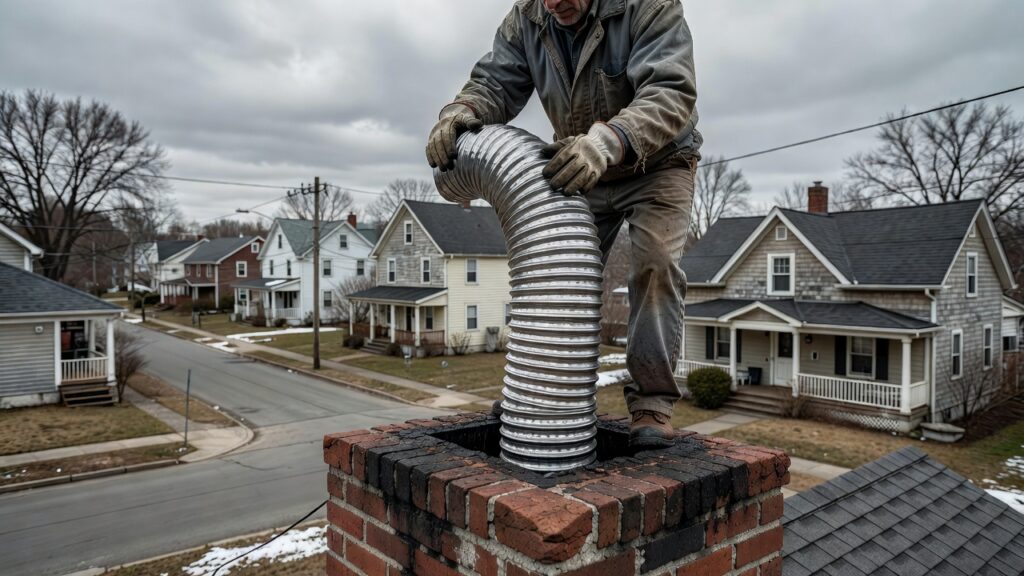
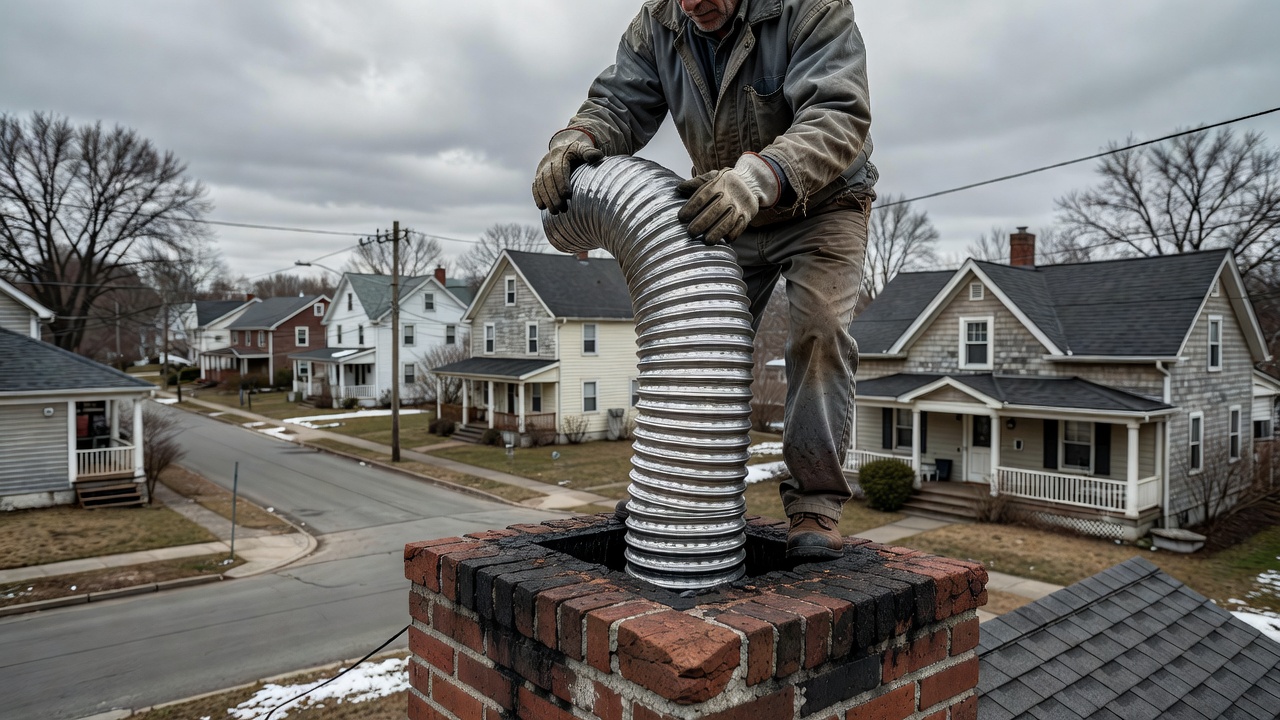
A homeowner in Ridgefield Park called us in late February of last year after another company quoted them $950 for a liner installation. The house was a 1940s Cape Cod with a single-flue masonry chimney very common in that part of Bergen County. When we arrived to do a level 2 chimney inspection, we found a 25-foot flue, a tight offset near the smoke chamber, and a terra cotta liner that had cracked in at least four sections. The $950 quote would have covered a basic flexible liner drop in a straight, uncomplicated flue. It would not have covered the offset, the custom top plate fabrication, or the insulation wrap the manufacturer required for that appliance. The finished job came to just over $2,400. That is not a bait-and-switch story it is a scope story, and scope is almost everything in liner work.
The Price Range Is Real, and Here Is Why
People see liner quotes ranging from under a thousand dollars to over four thousand and assume someone is being dishonest. Usually nobody is. Chimney liner installation Teaneck NJ varies this much because the variables that drive cost are genuinely significant and genuinely different from house to house.
The liner material alone accounts for a wide range. A basic 316-grade stainless steel flexible liner is less expensive than a 304-grade liner with an insulation wrap kit. An aluminum liner only appropriate for certain gas appliances under NFPA 211 costs less upfront but is not suitable for wood-burning fireplaces or oil-fired equipment. The 2026 edition of NFPA 211 is clear that liner material must be matched to the appliance fuel type and operating temperature. When a homeowner in Fort Lee asks why their neighbor’s liner cost half as much, the answer is almost always that the neighbor has a gas insert and a shorter, straighter flue.
Flue length and configuration matter enormously. A 15-foot straight run is a fundamentally different job from a 30-foot flue with two offsets. Every offset requires a custom bend in the liner or a connector section, both of which add labor and parts. Older homes in Ridgefield Park, Maywood, and River Edge frequently have chimneys that served coal-converted-to-oil systems, and those flues were not always built with future liner retrofits in mind. We have seen some tight ones.
The Insulation Wrap Is Not Optional Padding
One of the most persistent cost misunderstandings involves insulation. Some homeowners see “insulation wrap” on a quote and assume it is an upsell. In many installations it is a code requirement, not a choice. According to the Chimney Safety Institute of America, insulating a liner improves draft, reduces creosote buildup, and significantly extends liner life particularly in exterior chimneys where the flue loses heat rapidly in cold weather. In northern New Jersey, where January temperatures can drop into the single digits and freeze-thaw cycles stress masonry hard, an uninsulated liner in an exterior chase is working against itself from the start.
If a quote does not include insulation wrap and your chimney has any exterior wall exposure, ask why. Sometimes it is legitimately unnecessary. Sometimes it is how a low number stays low.
A New Liner Does Not Fix a Damaged Firebox or Crown
This one cost people real money. A homeowner gets told they need a liner, they get the liner installed, and two winters later they are calling again because water is getting in. The liner did not fail the crown was cracked and was never addressed. Or the flashing was loose. Or the firebox had open mortar joints that were letting moisture track down behind the liner.
Chimney liner installation Teaneck NJ addresses the flue. It does not address the masonry surrounding it. Our technicians will always point out crown damage, spalling brick, or repointing needs during the liner job but if a crew installs a liner and leaves without mentioning the crown condition, that is a gap in the work. A masonry repair and repointing assessment should happen alongside any liner evaluation. They are related systems.
Not Every Old Liner Needs Full Replacement
Here is one that cuts the other direction. Some homeowners are told their liner is shot and needs complete replacement when what they actually have is a liner with isolated damage that could be repaired with a cast-in-place product or a sectional repair, at lower cost. We do not replace liners we can reasonably repair. That said, terra cotta liners in homes from the 1930s and 1940s common throughout older sections of Englewood Cliffs and Palisades Park often have cumulative damage from decades of freeze-thaw stress that makes piecemeal repair impractical. The honest answer depends on what a camera inspection actually shows, not on what is easiest to quote.
According to the CSIA, a video inspection of the flue interior is the only reliable way to assess liner condition before recommending a course of action. Any recommendation made without one should be treated with caution.
The 2026 Cost Reality for Bergen County
For a typical single-flue installation in Ridgefield Park or the surrounding area in 2026, homeowners should budget roughly $1,800 to $3,500 for a flexible stainless steel liner with insulation, a new top plate, and a rain cap. Simpler gas-only installations can come in below that. Complex jobs long flues, heavy offsets, cast-in-place systems, or fireplace conversions requiring a full chimney inspection first can exceed $4,000. These are honest ranges based on work we do in this market. Material costs have risen over the past two years, and labor in Bergen County reflects that.
What we would caution against is choosing a contractor on price alone. A liner that is the wrong gauge for your appliance, improperly terminated, or installed without the correct clearances is not a bargain it is a hazard.
Get a Quote Based on Your Actual Flue
If you are a homeowner in Ridgefield Park, New Milford, or anywhere else in Bergen County trying to figure out what a liner job will actually cost for your specific chimney, we are glad to take a look. Our team will do a proper assessment, walk you through what we find, and give you a written estimate with nothing hidden. Reach out through our website contact form to get started no obligation, no pressure.
Frequently Asked Questions About Chimney Liner Installation in Teaneck NJ
How do I know if my chimney liner actually needs replacing?
The only reliable way is a video camera inspection of the flue interior. Visible symptoms like flaking debris in the firebox, draft problems, or a smoky smell in the house can indicate liner damage, but they do not tell you the extent. We run a camera before recommending any liner work so you know exactly what you are dealing with.
Can I use my fireplace while waiting to get the liner replaced?
If your inspector has flagged the liner as compromised, we strongly advise against it. A cracked or deteriorated liner allows combustion gases including carbon monoxide to migrate into the living space through gaps in the surrounding masonry. This is a health and fire safety issue, not just a code issue. Leave the fireplace unused until the liner is addressed.
Does chimney liner installation Teaneck NJ require a permit in Bergen County?
Permit requirements vary by municipality. Some towns in Bergen County require a permit for liner installation, particularly when it involves appliance conversions or new heating equipment connections. We handle the permit question as part of our pre-job process and can advise you based on where your property is located.
How long does a stainless steel flexible liner last?
A properly installed and maintained 316-grade stainless steel liner, used with an appropriate appliance and cleaned annually, typically carries a manufacturer warranty in the range of 15 to 25 years. Real-world service life depends heavily on fuel type, usage frequency, and whether the liner is insulated. Annual chimney sweeping extends liner life noticeably by preventing corrosive creosote buildup.
Why are liner quotes so different from one contractor to the next?
Scope is the most common reason. A quote that does not include insulation wrap, a new top plate, or flue offset work will look cheaper on paper but may not cover what your chimney actually requires. Always ask for a written, itemized quote and confirm what is and is not included before signing anything.
Is an aluminum liner ever appropriate, and is it cheaper?
Aluminum liners are less expensive and are approved for use with certain mid-efficiency gas appliances only. They are not suitable for oil-fired equipment, wood-burning fireplaces, or high-efficiency gas appliances that produce acidic condensate. NFPA 211 specifies these distinctions clearly. If someone quotes you an aluminum liner for a wood-burning fireplace, that is a red flag.
Related from Teaneck Chimney: Honest Chimney Repointing Teaneck NJ · Chimney Inspection in Teaneck, NJ · Smart Chimney Cap Installation Teaneck NJ